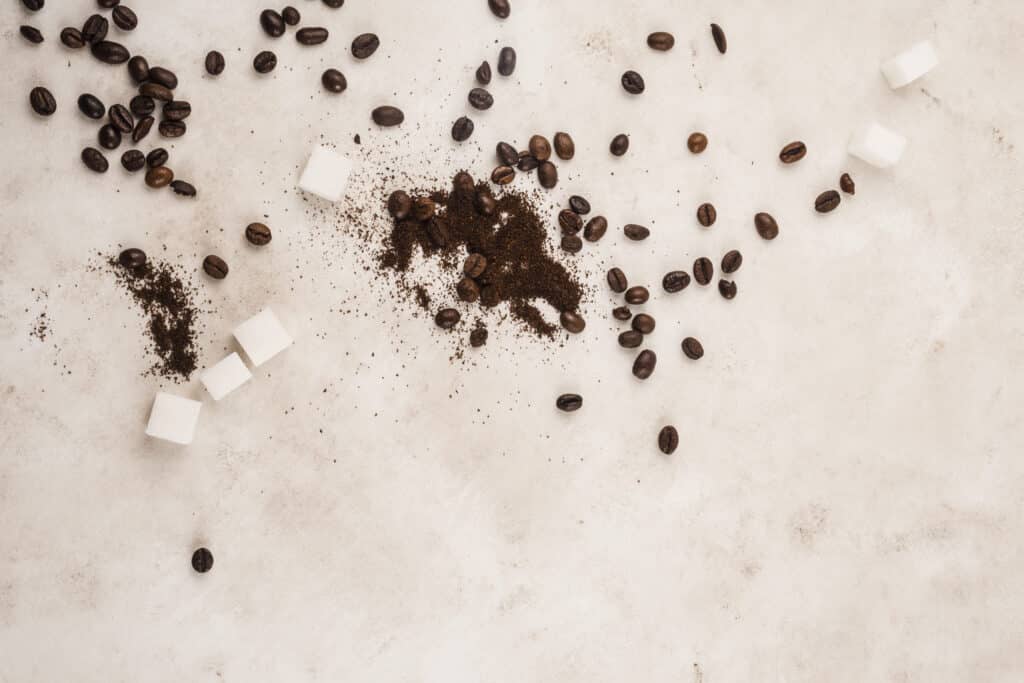
Short Answer: Tiny piles of pellets near stucco cracks, vents, or ceiling-wall joints are almost always drywood termite frass. Specifically, drywood termites push waste pellets out of small kick-out holes — the pellets land in small piles that look like coarse coffee grounds or coarse pepper. Each pellet is roughly 1mm long with a six-sided cross-section. So when homeowners ask ‘what do termite droppings look like in stucco,’ the honest answer is uniform hexagonal pellets, gritty, in small piles below a tiny exit hole — not random dust, sand, or sawdust. Finding them almost always means an active or recently active colony.
A small pile of what looks like coarse sand near a stucco crack is one of the most overlooked early warning signs in Southern California termite country. Most homeowners sweep it up and forget it. But that pile is almost always drywood termite frass — the calling card of an established colony eating the wood inside your walls. This guide covers what frass actually looks like, why stucco hides it better than wood surfaces, and how to tell active infestation from old activity.
What Drywood Termite Frass Actually Looks Like
Specifically, drywood termite pellets are uniform in size and shape, which is what distinguishes them from random debris. According to University of Florida extension research on drywood termites, fecal pellets are “hexagonal in cross section” and “can be a variety of colors, including cream, red, or black” depending on the wood the colony is eating. Each pellet is roughly 1mm in length.
Drywood Termite Frass Identification
- Size: about 1mm long (slightly smaller than a grain of rice)
- Shape: oval with rounded ends, six-sided when viewed in cross-section
- Color: cream, tan, reddish-brown, or near-black depending on wood
- Texture: gritty when swept, does NOT smear or smudge
- Pattern: small piles below tiny “kick-out” holes (1/16-inch diameter)
- Comparison: looks like coarse coffee grounds, coarse pepper, or kosher salt
Notably, the uniform size and hexagonal cross-section are the giveaway. Specifically, sand grains are irregular in shape; sawdust is fibrous; cockroach droppings smear; rodent droppings are too large and smooth. Only drywood termite pellets look like this.
Why Stucco Hides Frass Better Than Wood Surfaces
Above all, stucco is the worst surface in your home for noticing drywood termite frass — not because the termites prefer it, but because the texture, color, and architecture all conspire to obscure the evidence. Specifically:
- Stucco texture matches frass color. Cream-colored or tan stucco hides cream-to-tan pellets almost perfectly. By contrast, painted wood trim shows the pellets as obvious dark specks.
- Stucco cracks trap pellets. Specifically, hairline cracks at stucco-trim joints catch falling pellets before they land in a visible pile.
- Wind blows pellets into wall corners. In Riverside’s Santa Ana wind conditions, pellets often migrate from their original drop point and accumulate in unexpected corners.
- Stucco’s matte finish kills contrast. Furthermore, the rough texture absorbs light and visually breaks up small pellet piles.
- Termites enter through trim, not stucco itself. As a result, frass appears at the interface between stucco and wood trim — a transition zone homeowners rarely inspect closely.
By contrast, the same colony in a wood-sided home produces obvious pellet piles on horizontal wood surfaces, where painted wood and pellet color contrast clearly.
Where to Look on Riverside Stucco Homes
In practice, drywood termites in stucco homes leave frass at predictable locations. Specifically, run inspections at these spots quarterly:
- Below window and door frames. Termites enter through trim wood, kick-out holes appear at the trim-stucco joint.
- At the stucco-fascia joint along the roofline. Furthermore, this is the most common access point for drywood swarmers.
- Below ceiling cracks indoors. Specifically, frass falling from above lands on baseboards, picture rails, or floors directly below.
- Where stucco meets wood patio covers and eaves. Notably, attached patio covers are common entry points overlooked in standard inspections.
- Ground level near the foundation, especially weep screeds. Specifically, weep holes in stucco can release pellets that drywood colonies push out from interior wall voids.
Generally, our companion guide on drywood termites covers the species biology in more depth, while drywood vs subterranean termites covers the species comparison.
Frass vs Sand vs Sawdust: A Quick Comparison
| What you’re seeing | Distinguishing feature | Action |
|---|---|---|
| Drywood termite frass | Uniform 1mm hexagonal pellets, gritty, piles below tiny holes | Call for inspection |
| Sand | Irregular grain shape and size, no piles from height | Identify source (planters, masonry) |
| Sawdust | Fibrous, irregular, lighter than frass | Source = recent woodwork or carpenter ants |
| Cockroach droppings | Black, cylindrical, smear when wiped | Cockroach control needed |
| Rodent droppings | Larger (3mm-1cm), smooth, often near kitchens | Rodent inspection |
| Plaster crumbs from cracks | White-gray, irregular, falls only from active cracks | Stucco repair |
Specifically, the gritty texture combined with uniform pellet size is the diagnostic. Furthermore, swept pellets stay loose and dry — they do not clump or smear like organic debris.
What Frass Tells You About Colony Activity
Notably, the freshness and growth pattern of a frass pile reveals whether the colony is active. Specifically:
- Sweep the pile and mark the location. Use painter’s tape or a small chalk circle.
- Wait 48-72 hours. Active colonies push fresh pellets daily.
- If new pellets appear, the colony is active. Therefore, schedule inspection.
- If no new pellets appear, the activity may be old. By contrast, this could also mean the colony is between feeding cycles or has shifted location within the same structure.
- Check multiple suspected locations simultaneously. Furthermore, drywood colonies can have multiple kick-out holes from a single nest.
Above all, the EPA’s guidance on termite identification emphasizes early detection. According to the EPA’s termite identification guide, homeowners “rarely emerge from soil, mud tubes, or food sources through which they are tunneling,” so visible frass is one of the few external signs that an active colony is present.
When Frass Means “Call Now” vs “Monitor”
In practice, not every frass discovery warrants emergency response. Specifically, three categories help triage:
Triage Categories
- CALL NOW: Fresh, growing pile at multiple locations; pellets indoors near ceiling cracks; visible kick-out holes with active pellet flow; combined with hollow-sounding wood
- SCHEDULE INSPECTION (within 1-2 weeks): Single fresh pile in one location; recent stucco crack with pellets accumulating; finding frass during home purchase inspection
- MONITOR (sweep, recheck weekly): Old, dry pile with no fresh pellets after 72 hours; single pellet found alone; pile in an outdoor location with no nearby wood structure
By contrast, a homeowner who finds a single pellet on a windowsill once and never again can monitor with quarterly inspections rather than emergency response.
The Six-Sided Pellet Test
Generally, a magnifying glass and good lighting confirm drywood termite frass in 30 seconds. Specifically:
- Pick up 2-3 pellets with a piece of tape (sticky side down).
- Examine under a magnifying glass with bright light.
- Look at the cross-section — drywood termite pellets show six flat sides (hexagonal cross-section).
- Confirm uniform size — all pellets from one colony look essentially identical.
- Note color — colonies eating different woods produce different colors, but ALL pellets from one site should match.
Furthermore, this test distinguishes drywood from subterranean termites — subterranean species do not produce visible pellet piles because they consume their own frass for moisture in mud tunnels.
When to Call Southland Pest Control
Specifically, call us immediately if any of the following apply:
- Active, growing frass pile at any location
- Frass at multiple locations on the same property
- Visible kick-out holes with pellet flow
- Hollow-sounding wood near frass
- Frass found during a home purchase inspection
- Past termite activity in your neighborhood combined with new frass discovery
Our termite control team handles species ID, kick-out hole mapping, treatment planning, and structural assessment in one coordinated visit. Furthermore, our termite inspection service covers the full property — frass at one location often indicates colony presence elsewhere. To get started, schedule a termite inspection — early frass detection plus treatment beats late-stage structural damage every time.
FAQ
What color are termite droppings?
Specifically, drywood termite droppings vary from cream to tan to reddish-brown to near-black depending on the wood the colony is eating. According to University of Florida extension research, color reflects diet — pellets from a redwood-fed colony look different from pellets from a pine-fed colony. Furthermore, all pellets from a single colony should match in color and size. Variable colors in one pile suggests multiple colonies or contamination from other debris.
Are drywood termite pellets dangerous?
Generally, the pellets themselves are not dangerous — they’re not toxic and don’t carry pathogens. By contrast, what they indicate IS dangerous: an active drywood termite colony in your walls, wood framing, or ceiling. Specifically, untreated drywood infestations can cause structural damage that is expensive to repair and rarely covered by standard homeowners insurance. The pellets are evidence, not the threat.
Can termite frass appear without active termites?
Notably, yes — old frass can persist for months after a colony has been treated, relocated, or died off. Specifically, the sweep-and-wait test (sweep the pile, check for new pellets after 72 hours) confirms whether activity is current. Furthermore, fresh pellets are typically uniform in color and slightly moist; very old pellets may be discolored or partially crumbled. When in doubt, professional inspection confirms active vs inactive.
How do I get rid of termite droppings?
Specifically, vacuum the pellets and dispose of them — they’re inert organic material. By contrast, getting rid of the underlying colony requires treatment of the wood structure. The droppings will keep returning until the colony is treated. Therefore, focus on the colony, not the pellets. Treatment options range from localized spot treatment to whole-structure tent fumigation, depending on colony size and accessibility.
Should I clean up the frass or leave it?
Generally, leave a small sample for the inspector. Specifically, photograph the pile, then collect a teaspoon of pellets in a plastic bag for the pest professional. Furthermore, sweep the rest and mark the location with painter’s tape so you can monitor for new pellets. By contrast, sweeping everything before inspection eliminates evidence the inspector needs for accurate species ID and treatment planning.
How often should I check for frass?
In practice, quarterly visual checks of high-risk locations (window frames, roofline, eaves, ceiling cracks) catch new infestations early. Specifically, Riverside’s drywood termite season peaks during warm months when swarmers establish new colonies. As a result, pre-summer and post-summer checks are particularly valuable. Furthermore, annual professional termite inspection is the gold standard for early detection, especially for stucco homes where frass hides easily.