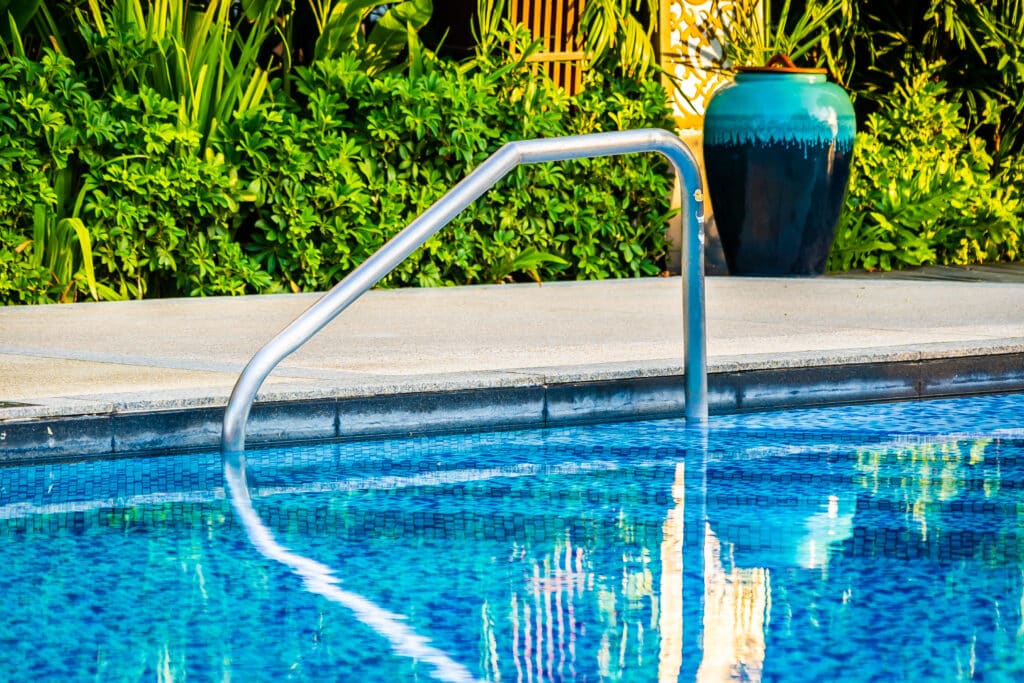
Short Answer: Pool drains in Riverside are textbook mosquito breeding sites — they hold standing water hidden from view, retain it for days even in dry weather, and stay shaded long enough for full egg-to-adult cycles. Mosquitoes need just a teaspoon of standing water and 5 days to produce biting adults. Pool deck drains, autofill drains, equipment box drains, and overflow lines all qualify. So when homeowners ask ‘why are mosquitoes breeding in my pool drain,’ the honest answer is the drain is doing exactly what mosquito eggs need — and yard spray won’t reach what’s hidden inside it.
A backyard pool with active mosquitoes biting at the same time every evening usually has one of three sources, and the pool drain is the most-overlooked of the three. Yard fogging and citronella candles miss it completely because the breeding water sits inside the drain housing, out of spray reach. This guide covers why pool drains are such efficient mosquito factories in Riverside, where to look on your own property, and why source removal beats every kind of yard spray.
Why a Pool Drain Is the Perfect Mosquito Nursery
Specifically, four conditions converge in pool drain housings to make them ideal for mosquito breeding:
- Persistent shallow water. Generally, drain channels and equipment boxes hold a thin layer of water for days even in dry weather. Furthermore, even in regulated pool autofill systems, drain components retain residual water between cycles.
- Shade and shelter. Specifically, drain covers and grates block direct sunlight and predator access — exactly the conditions mosquito eggs need.
- Organic debris feeds larvae. Notably, leaves, pollen, dust, and skin oils accumulate in drain water and feed mosquito larvae through their full development cycle.
- Reliable temperature. Above all, Riverside summer temperatures (75-95°F) are inside the optimal range for fast mosquito development. As a result, the egg-to-biting-adult timeline compresses from the maximum 14 days down to as few as 5 days.
According to CDC mosquito control guidance, mosquitoes “lay eggs near water” and the standard fix is to “empty, scrub, turn over, cover, or throw out any items that hold water” — including pools and drains.
The Hidden Drains You’re Probably Missing
In practice, most Riverside pool owners check the obvious water sources (the pool itself, fountains, plant pots) but miss the drains that quietly breed thousands of mosquitoes. Specifically, run inspections at these locations:
Hidden Drain Inspection Checklist
- Pool deck drains and channel drains — flat slot drains around the pool perimeter
- Pool equipment box drains — equipment housings have weep drains that hold water
- Autofill float drains — float housings retain residual water below the float
- Pool cover drainage points — pockets and seams in the cover collect rainwater
- Pool overflow lines — overflow piping holds water between events
- Patio area floor drains — sloped patios with floor drains often near the pool
- Yard French drains — perforated pipe under gravel can hold standing water
- Sump pump pits and pump well drains — pump housings retain water
Furthermore, the Greater Los Angeles County Vector Control District notes that mosquitoes can breed in “any container capable of holding at least a teaspoon of water” — which describes most pool drainage features in SoCal homes.
Why 5 Days Matters: The Egg-to-Adult Cycle
Specifically, mosquito breeding cycles in Riverside summer are fast enough that ignoring drain water for a week creates an active biting population. Furthermore, the cycle:
- Day 0: Female mosquito lays 100-300 eggs on or near standing water
- Day 1-2: Eggs hatch into larvae (“wigglers”) in the water
- Day 3-4: Larvae develop through 4 instars, feeding on organic matter
- Day 5-6: Larvae pupate; pupae develop into adults
- Day 5-7: Adults emerge from water and begin seeking blood meals
Notably, this means the standing water in your pool drain on Sunday could be biting you on Friday. By contrast, yard fogging on Friday only kills the adults that have already emerged — the next batch is already developing in the same drain water.
Source Removal vs Spray: Why One Works and the Other Doesn’t
Above all, the most common mosquito control mistake in Riverside backyards is spending money on yard fogging without addressing breeding sources. Specifically:
- Yard fogging kills adult mosquitoes within range, briefly. Generally, the effect lasts hours to a day. Furthermore, the next generation hatches from the same drain water within 24-48 hours.
- Citronella candles repel adults near the candle. Specifically, repulsion zone is 3-6 feet, and only while candles are lit. By contrast, candles do nothing about ongoing breeding.
- Bug zappers are largely ineffective for mosquitoes. Notably, mosquitoes are attracted to CO2 and body heat, not the UV light of zappers.
- Source removal eliminates the population. Above all, draining or treating breeding water stops new generations from emerging.
By contrast, our companion guide on why mosquito spray doesn’t work covers the broader spray-vs-source argument in more depth, while why you can’t enjoy your Riverside backyard covers the lifestyle impact of unaddressed mosquito populations.
The Drain Inspection Walk
Specifically, run this 15-minute walk weekly during May-October Riverside mosquito season:
- Pool deck drains. Lift removable grates, look for standing water and larvae (small wigglers).
- Pool equipment area. Specifically, check inside equipment boxes, around pump housings, and at any low points where water can pool.
- Autofill float housing. Notably, lift the float cover and check for residual water in the housing.
- Pool cover. Specifically, look at corners, seams, and any low spots that collect rainwater or condensation.
- Patio drains. Furthermore, sloped patios drain to a low point — check for water held below the grate.
- Yard low spots after irrigation. Above all, walk the yard 30 minutes after irrigation and note any low spots holding water 24+ hours later.
- Gutters and downspouts. Specifically, clogged gutters and downspout splash blocks routinely hold standing water.
By contrast, finding NO standing water during the inspection means the breeding source is somewhere else — possibly a neighboring property, an irrigation valve box, or a hidden roof drain.
The Fix: Empty, Cover, Treat, Repeat
In practice, this four-step protocol clears most pool-area mosquito breeding within 1-2 weeks:
- Empty all standing water you find. Specifically, drain pool deck channels, tilt equipment box covers, dump out any pooled water on covers.
- Cover containers that can’t be drained. Generally, screen mesh smaller than mosquito-size (1.5mm or smaller) over drain openings stops adult mosquitoes from accessing the water.
- Treat persistent water with mosquito dunks. Specifically, Bti-based dunks (Bacillus thuringiensis israelensis) kill mosquito larvae but are safe for fish, pets, and people. Furthermore, one dunk treats up to 100 square feet of water for 30 days.
- Repeat weekly. Above all, mosquitoes find new water faster than you’d expect. As a result, the inspection walk plus dunk refresh is a weekly habit, not a one-time fix.
Notably, the Greater LA County Vector Control District recommends Bti dunks specifically because they’re targeted (kill mosquito larvae only) and safe for non-target organisms.
Long-Term Prevention in SoCal Yards
Furthermore, several structural changes reduce ongoing breeding pressure:
- Re-grade low spots that hold water 24+ hours after irrigation. Specifically, soil amendment or French drain installation eliminates the chronic breeding zones.
- Replace open-drain pool deck channels with sealed or screened systems. Notably, modern channel drains include integrated mesh that blocks mosquito access.
- Adjust irrigation timing and volume. Generally, watering less frequently but more deeply reduces persistent surface moisture that attracts breeding mosquitoes.
- Maintain pool circulation continuously. Specifically, mosquito eggs do not survive in moving chlorinated water. As a result, pumps running at least 8 hours daily during summer keep the pool itself mosquito-free.
- Trim vegetation away from the pool perimeter. Above all, dense shaded vegetation provides daytime mosquito harborage near breeding sites.
When to Call Southland Pest Control
Specifically, certain situations push pool mosquito control past DIY territory:
- Active biting mosquitoes despite a thorough drain inspection
- Multiple suspected breeding sources (pool plus irrigation plus gutters plus neighbors)
- Larvae visible in pool deck channels or equipment boxes
- Pool that hasn’t been drained recently with persistent breeding
- Daytime mosquito activity (suggests Aedes species, which require source-finding for control)
Our mosquito control team handles property-wide source mapping, larvicide application, and adult population suppression in one coordinated visit. Furthermore, our companion piece on aggressive daytime mosquitoes in Riverside covers the species-specific issues that change control strategy. To get started, schedule a mosquito source inspection — the first visit covers full property breeding-source mapping, not just yard spray.
FAQ
How quickly do mosquitoes breed in standing water?
Specifically, in Riverside summer temperatures (75-95°F), mosquitoes complete the egg-to-biting-adult cycle in as few as 5-7 days. Furthermore, females can lay 100-300 eggs at once, so a single missed teaspoon of water can produce hundreds of biting adults in a week. By contrast, cooler temperatures slow the cycle to 10-14 days, but Riverside almost never gets cool enough during May-October to slow the cycle materially.
What pool/drain features attract mosquitoes most?
Notably, four features attract heavily: pool deck channel drains (slot drains around the pool perimeter), pool equipment box drains, autofill float housings, and pool cover seams that hold rainwater. Specifically, all four share the same characteristics — shaded, shallow, persistent water with organic debris. Above all, any feature that holds even a teaspoon of standing water for 5+ days qualifies as a potential breeding source.
Are pool drain mosquitoes carrying disease?
Generally, in Riverside the primary disease-vector species are Aedes aegypti and Culex tarsalis, both of which can breed in pool drainage features. Furthermore, the species-level disease risks include West Nile virus (Culex), and dengue/Zika risk (Aedes, though established outbreaks are rare). By contrast, individual exposure risk is low without a major regional outbreak, but ongoing biting populations warrant control regardless of immediate disease risk.
Can mosquito dunks fix this?
Specifically, yes — Bti dunks (Bacillus thuringiensis israelensis) are highly effective for treating breeding water you can’t drain. Notably, one dunk treats up to 100 square feet for about 30 days, kills only mosquito larvae and a few related species, and is safe for fish, pets, birds, and people. Furthermore, dunks are the right tool for pool drains, irrigation valve boxes, French drains, and any sustained standing water that can’t be eliminated.
Why won’t yard spray solve a drain breeding problem?
Above all, yard spray kills adult mosquitoes within range for hours to a day, but the next generation hatches from the same drain water within 24-48 hours. Specifically, the breeding source produces fresh adults faster than spray can suppress them. As a result, adult-targeting spray is a temporary symptom treatment, not a control strategy. By contrast, source removal stops new generations from emerging.
How do I know if my drain is the source?
In practice, the diagnostic walk: lift the drain cover, look for standing water, and check for larvae (small wiggling worms about 1/4 inch long). Specifically, the larvae are diagnostic — if you see wigglers, that drain IS a breeding source. Furthermore, even if you don’t see larvae, persistent standing water in a drain held more than 5 days during peak season is highly likely to be active. As a result, treat first, confirm with reduced biting later.