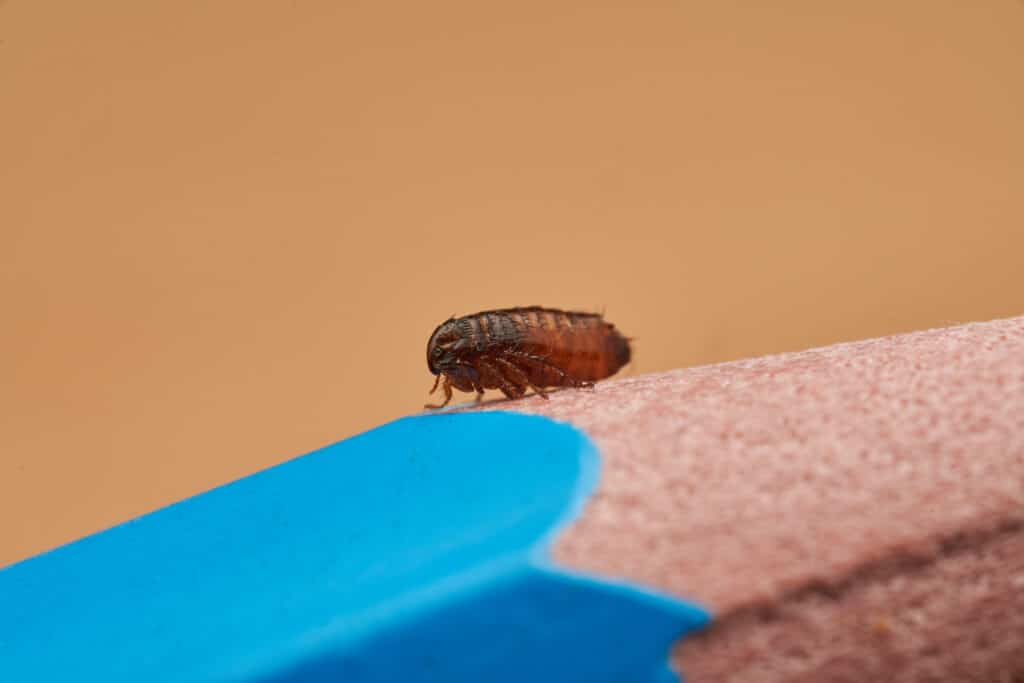
Flea season in the Inland Empire is not like flea season in most of the country. If you moved here from the Midwest or the East Coast, you might expect fleas to disappear once fall arrives. They don’t. Riverside’s mild winters and hot summers create conditions that keep fleas active far longer than most homeowners realize — and in some years, they never fully stop.
This guide breaks down flea activity in the Inland Empire month by month so you know exactly when to be on guard, when the risk is highest, and when to call in professional help.
The Short Answer
Fleas are most active in the Inland Empire from April through November, with peak activity from June through September. But unlike colder parts of the country where fleas die off completely in winter, Southern California’s mild climate means fleas can remain active year-round in sheltered environments. If your home has pets, carpet, or wildlife visiting the yard, there is no month where flea risk drops to zero.
When Does Flea Season Start in the Inland Empire?
In most of the U.S., flea season starts in late spring when temperatures climb above 70 degrees consistently. In the Inland Empire, that happens earlier than people expect.
Flea eggs and larvae need temperatures above 55 degrees and moderate humidity to develop. Riverside and surrounding cities like Moreno Valley, Corona, and Eastvale hit those thresholds as early as late February or March. By April, conditions are ideal for rapid flea reproduction outdoors.
But here is the part most homeowners miss: indoor fleas don’t follow the outdoor calendar. Your home stays between 65 and 78 degrees year-round. That means fleas that make it inside — on your dog, on your shoes, on a stray cat sleeping under the porch — can breed and thrive in January just as easily as in July.
The season “starts” outdoors in March and April. Indoors, it never really ended.
What Months Are Fleas Most Active in Riverside?
The peak months for flea activity in the Inland Empire are June through September. This is when outdoor temperatures stay consistently above 80 degrees, humidity from monsoon moisture drifts in from the desert, and pets spend more time outside.
Here is the month-by-month breakdown:
Early Season (March – May)
March: Flea eggs deposited in shaded soil, leaf litter, and under porches during the previous fall begin hatching as daytime temperatures climb. You probably won’t notice flea activity yet, but it is starting. Wildlife like opossums, feral cats, and raccoons are already carrying fleas through your yard and depositing eggs in the process.
April: Activity increases noticeably. Outdoor flea populations are growing, and pets that spend time in the yard start picking up hitchhikers. This is when the first wave of “where did these fleas come from?” calls begins. If your dog or cat is not on year-round flea prevention, now is the time to start.
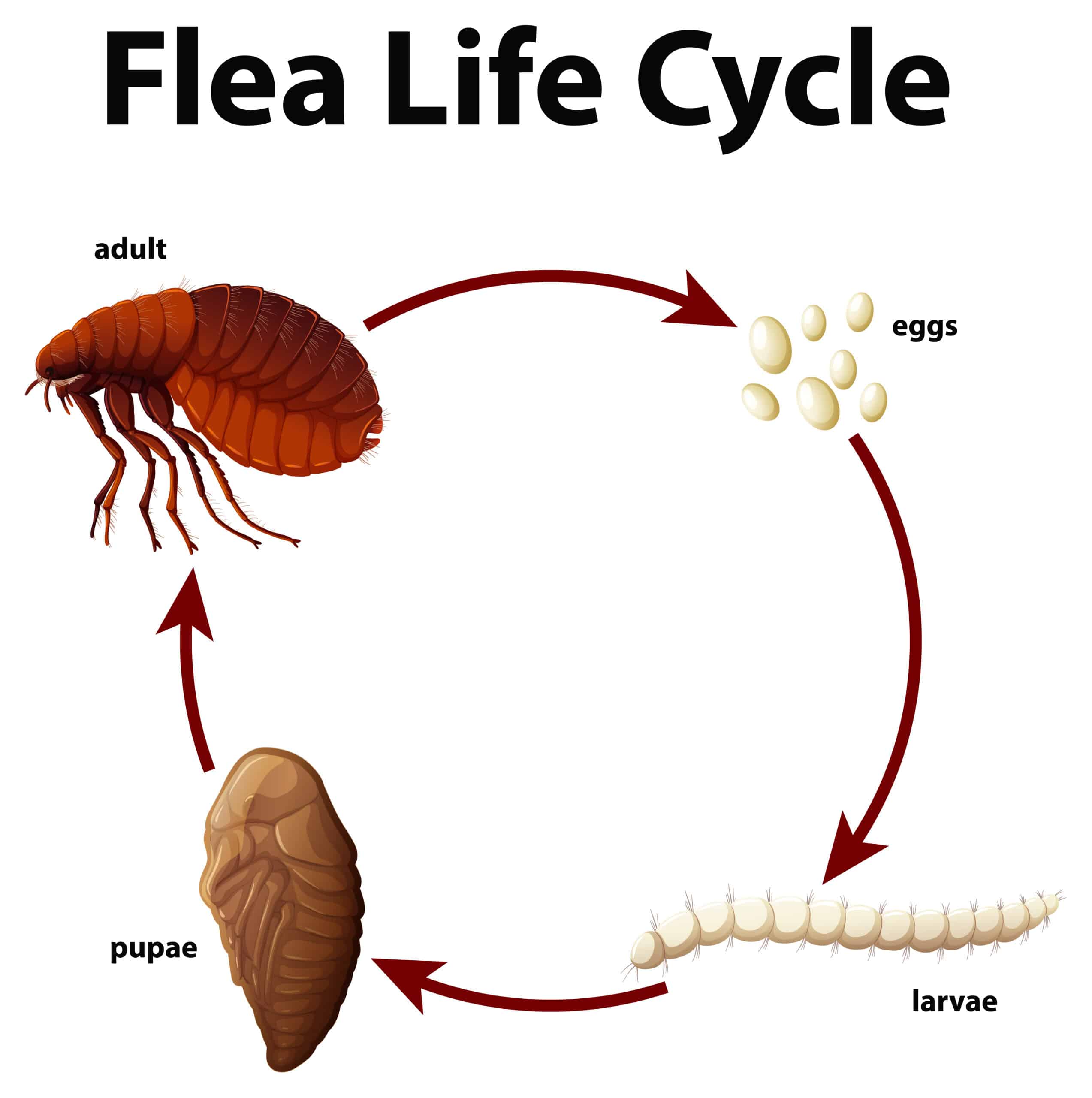
May: Flea reproduction is in full swing. In warm Inland Empire conditions, the entire flea lifecycle — egg to larva to pupa to biting adult — can complete in as little as two to three weeks. That means a small problem in April becomes a serious infestation by late May. This is the month to act if you haven’t already.
Peak Season (June – September)
June: Populations explode. A single female flea lays up to 50 eggs per day, and those eggs hatch in just two to five days in summer heat. Homes with pets and carpet are especially vulnerable. If you are finding bites on your ankles or seeing tiny dark specks jumping near baseboards, you already have an established population. Learn how fast fleas multiply in Riverside homes.
July – August: The worst two months. Temperatures in Hemet, Lake Elsinore, and Moreno Valley regularly exceed 105 degrees, which actually pushes fleas into shaded areas and indoors where conditions are more hospitable. This is when indoor infestations peak. Flea larvae are feeding on dried blood and organic debris deep in your carpet fibers, out of reach of surface-level vacuuming.
September: Still peak season. Temperatures remain in the 90s across the Inland Empire, and flea populations are at their highest density. Don’t let the start of school trick you into thinking the season is winding down. September flea calls are just as common as July ones.
Late Season (October – November)
October: Outdoor activity begins declining as nighttime temperatures drop below 60 degrees, but indoor infestations continue without intervention. Fleas already inside your home have everything they need — warmth, humidity, and a host — regardless of what is happening outside.
November: The outdoor season winds down for most of the Inland Empire. However, fleas in the pupal stage can remain dormant in cocoons for weeks or even months, waiting for vibrations, warmth, or carbon dioxide from a nearby host to trigger emergence. This is why people sometimes get flea bites in a home that has been vacant — the pupae were waiting.
Winter (December – February)
December – February: Outdoor flea activity drops to its lowest point, but it does not hit zero. Riverside’s winter lows rarely stay below 40 degrees for extended periods, and sheltered microclimates — under decks, in crawl spaces, inside dog houses — stay warm enough for fleas to survive. Indoor infestations are completely unaffected by winter weather. If fleas are in your carpet and your home is heated, they will keep breeding through the holidays and beyond.
Why Don’t Fleas Die Off in Winter in Southern California?
In states with true winters — hard freezes, sustained temperatures below 30 degrees — fleas are killed off outdoors every year. The slate gets wiped clean, and the cycle restarts from scratch each spring.
That doesn’t happen in the Inland Empire. According to UC IPM’s guide on fleas, fleas need sustained freezing temperatures to be killed outdoors. Riverside averages only a handful of nights below freezing each winter, and daytime temperatures quickly recover into the 50s and 60s. That is not cold enough or long enough to break the cycle.
This is why flea season in California is fundamentally different from flea season in most of the country. There is no hard reset. Fleas carry over from year to year, and each spring’s population builds on whatever survived the winter before.
How Do Fleas Get Into Homes Without Outdoor Pets?
This is one of the most common questions homeowners ask after discovering fleas in a home with no pets — or only indoor pets.
The answer is wildlife. The Inland Empire is home to a steady population of opossums, feral cats, raccoons, and coyotes, all of which carry fleas. When these animals pass through your yard, sleep under your porch, or shelter in your crawl space, they leave behind flea eggs that hatch and start looking for a host.
From there, fleas get inside on:
- Your shoes and clothing after walking through infested grass
- Used furniture or rugs brought in from another home or storage
- A visiting pet — a friend’s dog that spent 10 minutes in your living room
- Open doors and windows — adult fleas can jump up to 13 inches vertically
Even a single pregnant female flea that makes it inside can produce a full-blown infestation within a few weeks. That is how people end up with hundreds of fleas in a home that has never had a pet.
What Makes Flea Infestations So Hard to Get Rid Of?
The flea lifecycle is specifically designed to be resilient. Understanding it explains why store-bought sprays and flea bombs usually fail.
Eggs make up about 50% of the flea population in your home. They are tiny, smooth, and fall off your pet into carpet, upholstery, and cracks in hardwood floors. No topical pet treatment kills the eggs already in your carpet.
Larvae make up about 35%. They live deep in carpet fibers and feed on organic debris — including dried flea feces (digested blood). They avoid light and burrow down where vacuums and surface sprays cannot reach them.
Pupae make up about 10%. This is the stage that makes fleas so persistent. The pupa is protected inside a sticky cocoon that is resistant to insecticides. It can remain dormant for up to five months, waiting for the right signals — vibration, warmth, carbon dioxide — to emerge as an adult. This is why you can treat a home, think the problem is solved, and then get bitten again weeks later.
Adults make up only about 5% of the total population. The fleas you see jumping are a tiny fraction of the problem. The other 95% — eggs, larvae, and pupae — are hidden in your carpet and are invisible to the naked eye.
This is why professional flea removal in Riverside uses a combination approach: adulticides to kill the fleas you can see, insect growth regulators (IGRs) to prevent eggs and larvae from developing, and follow-up treatments timed to catch emerging pupae.
Are Flea Bites Dangerous, or Just Annoying?
For most people, flea bites are intensely itchy but not medically dangerous. They appear as small red bumps, usually in clusters around the ankles, lower legs, and waistline.
But “just annoying” undersells the problem:
- Allergic reactions. Some people and pets develop flea allergy dermatitis (FAD), a severe allergic reaction to flea saliva that causes intense itching, hair loss in pets, and secondary skin infections from scratching.
- Tapeworms. Fleas are the primary vector for tapeworm transmission in dogs and cats. If your pet swallows an infected flea while grooming, it can develop a tapeworm infection. According to the CAPC parasite forecast, Southern California is a high-risk area for flea-transmitted parasites.
- Anemia. In severe infestations, young puppies, kittens, and elderly pets can develop anemia from blood loss.
- Bacterial infections. Fleas can transmit murine typhus and, rarely, plague bacteria. Murine typhus cases are reported in Southern California every year.
If you are not sure whether you are dealing with flea bites or something else, our guide on flea vs bed bug bites can help you tell the difference.
When Should You Call a Professional for Fleas?
If you are seeing more than a few fleas, you are already past the point where DIY methods will be effective. Here is the reality:
Flea bombs (foggers) deposit pesticide on surfaces but do not penetrate carpet fibers where larvae and pupae live. They also leave chemical residue on countertops, dishes, and toys.
Store-bought sprays kill adult fleas on contact but have no residual effect and do not contain IGRs to break the lifecycle.
Vacuuming alone helps — it removes some eggs and stimulates pupae to emerge — but it will not eliminate an infestation without chemical treatment.
The right time to call a professional is before the problem gets out of control. If you are seeing fleas in April or May, professional treatment prevents a full-blown summer infestation. If it is already July and you are getting bitten every day, professional treatment is the only reliable way to clear the infestation and break the lifecycle.
Fleas and mosquitoes share similar seasonal patterns in the Inland Empire. Just like mosquito control, the best strategy for flea control is starting early and staying consistent through peak season.
For a complete prevention strategy that covers every season, read our companion guide on how to protect your home and pets from fleas year-round.
Frequently Asked Questions
When does flea season start in Riverside?
Outdoor flea activity typically begins in March as temperatures consistently stay above 55 degrees. By April, conditions in Riverside, Corona, Eastvale, and surrounding cities are ideal for rapid flea reproduction. Indoor flea activity can occur year-round in heated homes.
Do fleas go away in winter in Southern California?
Not completely. Riverside’s mild winters rarely produce the sustained freezing temperatures needed to kill fleas outdoors. While outdoor activity drops from December through February, fleas survive in sheltered areas and continue breeding indoors without interruption.
Can I get fleas without having pets?
Yes. Wildlife like opossums, feral cats, and raccoons carry fleas through residential yards throughout the Inland Empire. Fleas can also enter your home on shoes, clothing, used furniture, or through a visiting pet.
Why do I still have fleas after treating my pet?
Because your pet is only 5% of the problem. Flea eggs, larvae, and pupae live in your carpet, not on your animal. Treating your pet kills adult fleas on the pet but does nothing to address the 95% of the population developing in your home. Professional treatment targets all four lifecycle stages.
How long does it take to get rid of fleas in a house?
With professional treatment, most infestations are resolved within two to three weeks. However, because pupae can remain dormant in cocoons for weeks, a follow-up treatment is typically needed 10 to 14 days after the initial application to catch newly emerged adults.
Are flea infestations worse in homes with carpet?
Yes. Carpet provides the ideal environment for flea eggs and larvae — warm, dark, and full of organic debris for larvae to feed on. Homes with all hard flooring still get fleas, but infestations tend to be less severe because eggs and larvae have fewer places to hide.
Stop Fleas Before They Take Over Your Home
Flea season in the Inland Empire is long — and in many homes, it never really ends. The longer you wait, the harder and more expensive the problem becomes. A few fleas in April become thousands by July.
Southland Pest Control provides professional flea removal in Riverside and throughout the Inland Empire. We target fleas at every lifecycle stage — adults, larvae, eggs, and pupae — so the infestation is eliminated, not just suppressed.
Locally owned since 2007. Licensed, insured, and a member of the National Pest Management Association. 170+ Google reviews at 4.9 stars.
Call (951) 653-7964 or email nopests@southlandpest.com to schedule an inspection.
We serve Riverside, Moreno Valley, Corona, Eastvale, Hemet, Lake Elsinere, and the entire Inland Empire. Same-week appointments available.
For general pest control in Riverside, we handle everything from fleas and ticks to ants, spiders, rodents, and more.