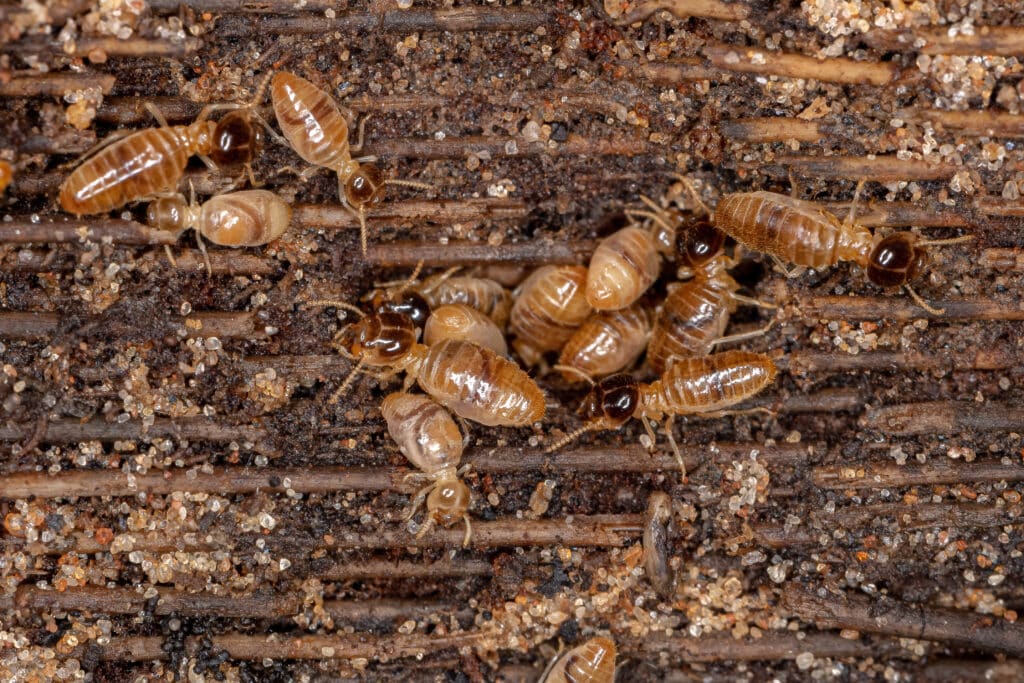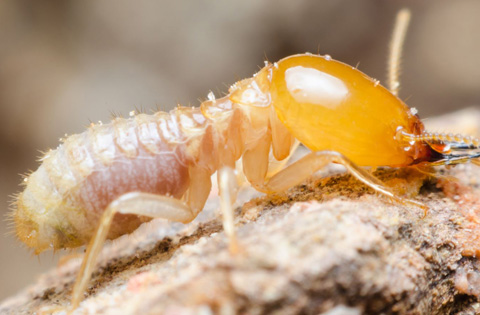
You found evidence of termites. Maybe it was a pile of small pellets near a windowsill. Or maybe it was mud tubes running along your foundation. Maybe a home inspection turned up damage you were not expecting. Now you are trying to figure out what you are actually dealing with.
The type of termite in your home determines everything about how it gets treated. Getting that wrong does not just waste money. It means the colony survives and the damage continues.
The Short Answer
Riverside County is home to two primary termite species. Drywood termites live and nest entirely inside wood with no soil contact, form smaller colonies, and are treated with fumigation, heat, or direct injection. Subterranean termites nest underground, travel through mud tubes to reach wood, form far larger colonies, and require soil-based treatments that are completely different from drywood protocols. A licensed inspection is the only reliable way to confirm which species you have before committing to any treatment.
Here is how to tell them apart and what each one means for your home.
Why the Distinction Matters So Much
Many homeowners assume that termites are termites and that any licensed pest control company will treat them the same way. That assumption leads to costly mistakes.
Subterranean termites cannot be eliminated using fumigation, heat treatment, or orange oil. These methods are designed for drywood termites and do not reach the reproductive colony, which lives underground and may extend several feet below your foundation. Treating a subterranean infestation with a drywood protocol leaves the colony intact and gives it time to continue damaging your structure.
The reverse is also true. Soil treatments used for subterranean termites do nothing to address a drywood infestation because drywood colonies have no connection to the soil at all. Choosing the wrong treatment wastes the treatment budget and leaves the infestation untouched.
Knowing which species you have before any treatment decision is made is not optional. It is the foundation of effective termite control.
Drywood Termites: What They Are and How to Identify Them
Drywood termites are the more common species encountered in Riverside County attics, walls, and wood framing. They infest dry, sound wood and need no contact with soil or moisture to survive. They extract all the water they need directly from the wood they consume.
Drywood termites can also infest furniture, window frames, and roof eaves. Learn more about identifying and treating drywood termites in our complete guide.
How drywood termites live:
Drywood termite colonies are relatively small, typically fewer than 1,000 individuals. They nest inside the wood itself, hollowing out galleries that run across the grain. A single structure can have multiple separate, unconnected colonies in different locations. This distributed nature is what makes them particularly difficult to treat without whole-structure methods.
Drywood termites are most commonly encountered in attic framing, roof eaves, door and window frames, furniture, and hardwood flooring. They are active year-round in Riverside’s warm climate.
Signs of drywood termites:
- Small piles of frass near baseboards, windowsills, or below wooden furniture. Drywood termite frass looks like tiny pellets resembling coffee grounds or black pepper and is one of the most reliable early indicators
- Smooth, clean galleries inside damaged wood that run across the grain
- Swarming activity during daylight hours, typically in late summer or fall, when winged reproductive adults emerge
- Hollow-sounding wood when tapped, indicating galleries have been excavated inside
- Discarded wings near windows and light sources after a swarm
According to the UC Integrated Pest Management Program, drywood termites are cryptic insects that are difficult to detect. They live deep inside wood and are seldom seen except during swarming periods or when repair work exposes infested wood. By the time frass or hollow wood is noticed, a colony is often well established.
Subterranean Termites: What They Are and How to Identify Them
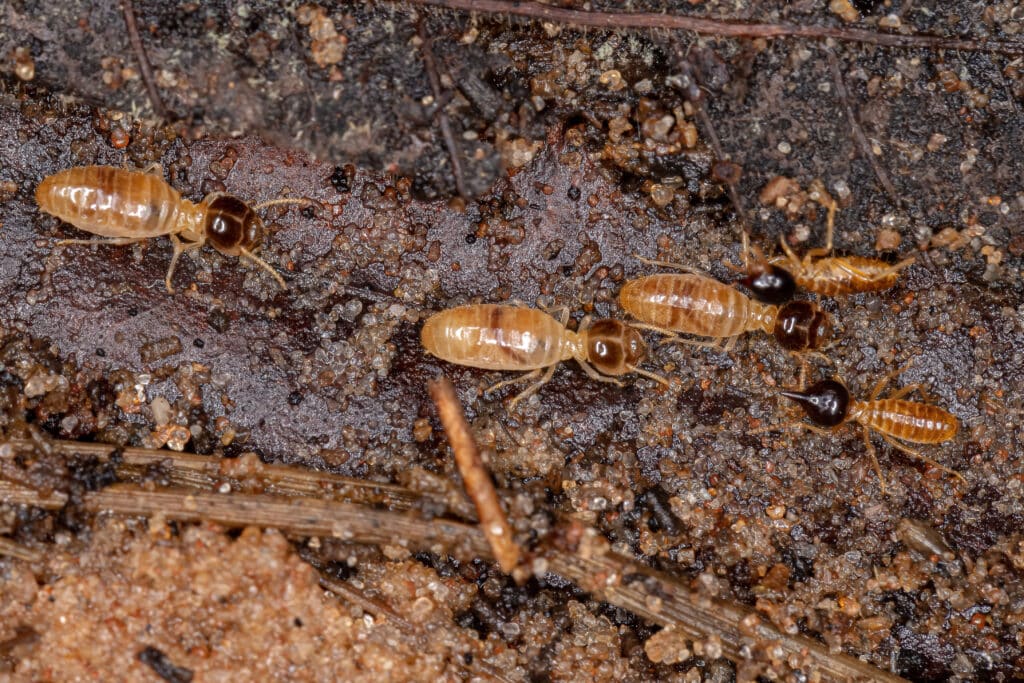
Subterranean termites are the most economically destructive termite species in California and the most damaging wood-destroying pest in the state overall. While drywood colonies stay small and localized, subterranean colonies can grow to several hundred thousand individuals and cause structural damage at a pace that drywood termites cannot match.
How subterranean termites live:
Subterranean termites nest underground, typically in soil below or adjacent to the structure. They require consistent moisture to survive and travel between their underground colony and the wood they consume through mud tubes. These tubes protect them from drying out and from predators during travel.
They tend to consume wood along the grain rather than across it, which means the damage they cause can hollow out structural members far more efficiently than drywood termites. Because the reproductive colony is underground and the workers travel to the wood source, the infestation point visible inside your home represents only a fraction of what is occurring.
Signs of subterranean termites:
- Mud tubes running along foundation walls, concrete piers, or any surface between soil and wood. These are the clearest and most definitive sign of subterranean termite activity
- Wood damage that follows the grain and leaves a layered, honeycomb-like pattern when exposed
- Soft or hollow-sounding wood near the foundation or at floor level
- Swarming activity, often in spring after rain, with winged adults emerging from soil near the foundation
- Bubbling or uneven paint near the base of walls, which can indicate moisture and subterranean activity in the wall void below
Subterranean termites are most commonly found in areas where wood contacts or comes close to soil, including porch steps, door frames at grade level, wood siding near the foundation, and crawl spaces.
Key Differences at a Glance
Understanding the structural differences between these two species helps clarify why treatment protocols are so different.
Colony Location
Drywood termites live entirely within the wood they infest. Subterranean termites live underground and travel to wood.
Colony Size
Oftentimes, drywood colonies typically number in the hundreds to low thousands. Subterranean colonies can reach several hundred thousand individuals.
Moisture Needs
Consequently, drywood termites extract moisture from wood and need no external water source. Subterranean termites require consistent soil moisture to survive.
Primary Evidence
Usually, drywood termites leave frass pellets. Subterranean termites leave mud tubes.
Damage Pattern
Likely, drywood termites excavate galleries across the grain. Subterranean termites consume along the grain, often leaving a thin shell of intact wood on the surface while hollowing the interior.
Treatment Approach
Drywood infestations are treated with fumigation, heat, spot injection, or orange oil depending on the extent of the infestation. Subterranean infestations require soil treatment, liquid termiticide barriers, or bait station systems. No drywood treatment method is effective against subterranean termites and vice versa.
Can Both Species Be Present at the Same Time?
Yes. This is more common than most homeowners expect, particularly in older Riverside homes where deferred maintenance has created both soil-to-wood contact and dry attic conditions favorable to drywood activity.
A home with an active subterranean infestation at the foundation level and a separate drywood infestation in the attic framing requires a treatment plan that addresses both species independently. This is one of the most important reasons to have a thorough inspection before committing to any protocol. A technician treating only what they observe at one location can miss an entirely separate infestation on the other end of the structure.
What a Professional Termite Inspection Covers
A licensed termite inspection in California covers all accessible areas of the structure, including the attic, crawl space, subfloor, exterior foundation, and visible interior framing. The inspector looks for active infestation, evidence of previous infestation, conditions likely to lead to infestation, and any areas requiring further investigation.
By California state law, the minimum requirement for termite inspections is a visual search of accessible areas. What distinguishes a thorough inspection from a cursory one is the scope of accessible areas examined and the experience of the inspector interpreting what they find. An inspector who identifies frass in one location and stops there may miss additional colonies elsewhere in the structure.
Southland Pest Control’s termite inspections cover the full structure and provide a clear report identifying the species present, the extent of activity, and the treatment options appropriate for what was found. If you are unsure what species you have or whether you have termites at all, an inspection is the correct first step before any other action is taken.
Choosing the Right Treatment Once You Know What You Have
Once a licensed inspection confirms the species and scope of the infestation, treatment selection becomes straightforward.
For drywood termites, treatment options range from whole-structure fumigation for widespread activity to heat treatment, spot injection, or orange oil for more localized infestations. A full breakdown of drywood treatment options and when each one is appropriate is available in our guide to termite treatment options for Riverside homes.
For subterranean termites, the appropriate response depends on the extent of the infestation and the construction of the home. Liquid soil treatments, termiticide barriers, and bait station systems are the primary tools. A professional termite inspection is required to determine which approach is right for the specific infestation and property.
If your inspection reveals both species are present, Southland Pest Control will develop a treatment plan that addresses each independently so neither goes untreated.
Schedule a Termite Inspection for Your Riverside Home
The longer a termite infestation goes untreated, the more expensive it becomes to resolve. Both drywood and subterranean termites cause cumulative structural damage that accelerates over time, and neither species leaves voluntarily.
Southland Pest Control has provided termite control services throughout Riverside County for over 19 years. Our licensed technicians conduct thorough inspections, identify species accurately, and recommend treatments based on what the inspection actually reveals.
If you have seen frass, mud tubes, hollow wood, or swarming activity at your Riverside property, contact us today for a professional inspection before the damage goes any further.
(951) 653-7964 | Schedule Your Inspection