
Pest Control in Wildomar, CA
Southland Pest Control provides state-licensed pest treatment for Wildomar homeowners and businesses. From termites and rodents to ants and mosquitoes, we understand the specific pressures that Wildomar's foothills, canyons, and fast-expanding neighborhoods create — and we know how to shut them down.

Get Your FREE Quote
Why Wildomar Properties Struggle With Pests in Every Season
Wildomar occupies a narrow valley corridor flanked by the Santa Ana Mountains to the west and rolling foothill terrain to the east, with the I-15 freeway running through the center and Lake Elsinore just minutes to the north. That positioning — open mountain habitat pressing against a fast-growing suburban grid, with seasonal water nearby and hundreds of new homes going up every year — puts Wildomar squarely at what ecologists call the wildland-urban interface. Pests from the hills have a short trip into your walls.
The city only incorporated in 2008 and has been growing rapidly ever since. Construction is constant, which means displaced wildlife, disturbed soil, fresh irrigation, and new landscaping are a permanent feature of the landscape. Homes range from 1970s Sedco Hills properties with decades of accumulated pest history to brand-new Canyon Hills builds where subterranean termites and Argentine ants arrive before the sod does. Whatever your home’s age and location, Wildomar’s warm climate and active surrounding habitat make year-round pest management a practical necessity — not just a precaution.
- Fully Licensed & Insured
- Locally Owned & Operated
- 5 Star Rated Service
- Customer Satisfaction Guarantee
- Emergency Services Available
- Professional Trained Technicians

Pest Activity by Wildomar Neighborhood
Sedco Hills and Windsong Valley:
Among the most established residential areas in Wildomar, with homes dating to the 1970s and 80s. Long-term drywood termite pressure is significant here — colonies have had 40+ years to work through fascia boards, attic rafters, and window framing. Cockroaches use aging utility penetrations and plumbing gaps. Rodents exploit foundation cracks and weatherstripped gaps that have widened over decades. Annual termite inspections are essential in this part of the city.
The Farm:
A unique master-planned community with 38 acres of working citrus groves, shared orchards, fishing ponds, and 600 acres of HOA-managed common area. That combination of organic material, standing water, and irrigated turf creates conditions that are exceptional for gophers, mosquitoes, and Argentine ants. Gopher tunneling under citrus root zones and irrigated lawns is a persistent year-round issue. Mosquito activity around the fishing ponds spikes from spring through fall.
Cottonwood Canyon and Canyon Hills:
Newer master-planned developments built against foothill terrain. Fresh landscaping and irrigated sod attract Argentine ant supercolonies almost immediately. Subterranean termites enter from soil around new foundations during irrigation season. Construction on adjacent undeveloped parcels continually displaces rodents into finished neighborhoods. Black widows are common in retaining walls and block wall construction throughout both areas.
Wildomar Springs and Heritage Crossing:
Growing communities in the rolling hills of central Wildomar. Homes on larger lots with mature trees and established landscaping face increased roof rat pressure as canopy connections to open hillside habitat are maintained year-round. Gophers are destructive on any irrigated lawn adjacent to undeveloped slope. Subterranean termite swarming is common in spring and winter when soil moisture is elevated.
Hillside and Semi-Rural Properties (Bundy Canyon, Clinton Keith Corridor):
Properties backing up to canyon land, open scrub, or undeveloped hillside face a different category of pest pressure than tract neighborhoods. Roof rats and mice travel directly from the Santa Ana Mountain foothills into homes along fence lines, tree canopies, and utility runs. Scorpions and black widows are regular visitors to rock walls, retaining structures, and irrigation boxes. Opossums and raccoons move freely between canyon habitat and residential yards.
Pest Pressure by Property Type in Wildomar
The pest threats you face in Wildomar depend heavily on when your home was built, where it sits relative to open land and water, and what your landscaping looks like. Here is a breakdown of what each property type typically encounters — and what Southland Pest Control does to address it.
| Sedco Hills & Windsong Valley (1970s–90s Homes) |
The Farm & Cottonwood Canyon | Canyon Hills & Newer Developments | Hillside & Semi-Rural Properties |
|---|---|---|---|
| Drywood termites established in aging fascia boards, attic rafters, and window framing | Gophers and ground squirrels tunneling through common-area citrus groves and irrigated turf | Argentine ant supercolonies forming rapidly in new mulch beds and irrigated landscaping | Roof rats and mice descending from Santa Ana Mountain foothills along tree canopies and fence lines |
| Cockroaches in older plumbing and utility gaps that have widened through decades of settling | Mosquitoes breeding in catch-and-release fishing ponds, pooled irrigation, and low-lying common areas | Subterranean termites attacking new foundations during irrigation season when soil moisture is high | Black widows and scorpions sheltering in retaining walls, rock features, and hillside block wall gaps |
| Rodents nesting in degraded insulation and wall voids of structures built before the 1990s | Rats and mice moving into homes as construction activity clears adjacent undeveloped parcels | Gophers destroying newly graded sod and fresh landscaping on recently completed lots | Opossums and raccoons moving from open canyon land into residential yards and trash areas |
Older Homes in Sedco Hills and Windsong Valley
Homes built in the 1970s and 1980s carry a long pest history that newer construction doesn’t. Drywood termite colonies have had decades to spread from original infestation points into connected wood framing throughout the structure. By the time visible damage appears — bubbled paint, hollow-sounding wood, frass piles — a colony has typically been active for years. Cockroaches establish through aging utility penetrations and plumbing lines that have shifted and cracked over time. Rodents exploit foundation gaps, deteriorated weatherstripping, and utility entry points that have widened through years of ground movement. If your Sedco Hills or Windsong Valley home hasn’t had a thorough pest inspection in the past two to three years, it’s overdue.
The Farm and Its Unique Pest Environment
The Farm is unlike any other neighborhood in Southwest Riverside County. Its 38 acres of working citrus groves, catch-and-release ponds, and extensive HOA common areas create pest pressures that standard suburban treatments don’t fully address. Gophers are the most consistent structural threat — they tunnel aggressively under root zones, sod, and irrigation lines year-round. The fishing pond and irrigated common areas create mosquito breeding habitat that produces localized pressure from April through October. Argentine ants use the massive irrigated turf areas as a highway network, sending foraging columns into adjacent homes whenever food or moisture inside is more accessible than outside. Homes backing directly onto the citrus grove perimeter see the most consistent activity.
Canyon Hills, Cottonwood Canyon, and Newer Builds
New construction in Wildomar comes with its own set of pest challenges that often surprise first-time homeowners. Argentine ants colonize fresh mulch and irrigated sod before the landscaping crew has left the jobsite. Subterranean termites are drawn to soil moisture around new foundations during irrigation season — the treated wood standard in current construction helps, but it doesn’t eliminate the risk. If active construction is happening within a half-mile of your home, expect displaced rodents, gophers, and ants to migrate toward finished properties as their previous habitat is cleared. Block wall construction throughout Canyon Hills and Cottonwood Canyon provides abundant harborage for black widows that is hard to eliminate without consistent perimeter treatment.
Hillside and Semi-Rural Properties
Wildomar properties that share a boundary with open canyon land or hillside scrub face a genuinely different pest threat than those in dense suburban tracts. The Santa Ana Mountains act as a continuous reservoir for roof rats, mice, opossums, raccoons, scorpions, and black widows. These pests don’t respect fences — they travel along tree canopies, utility lines, and block walls from open habitat directly into attics, wall voids, and garages. Rodent exclusion — sealing every entry point larger than a quarter inch — is the single most important service for these properties. Regular perimeter treatment keeps black widow and scorpion populations suppressed between visits. Without consistent service, semi-rural Wildomar homes become an extension of the hillside habitat they border.
Common Pests We Eliminate in Wildomar
| Ants | Bed Bugs | Bees |
| Cockroaches | Fleas | Gophers |
| Mice | Mosquitoes | Rats |
| Scorpions | Spiders | Termites |
| Wasps |
Southland Pest Control handles pest problems across all of Wildomar — from Sedco Hills and Windsong Valley to Canyon Hills, The Farm, and the hillside properties along the Bundy Canyon and Clinton Keith corridors. We cover every zip code in the city and bring specific knowledge of each neighborhood’s pest history.
We also serve Lake Elsinore, Murrieta, Menifee, Temecula, and the broader Southwest Riverside County area. Call today for a free inspection and estimate.
Get Your Free Wildomar Pest Quote
Our state-licensed technicians serve every Wildomar neighborhood — from The Farm and Sedco Hills to Canyon Hills and the hillside corridors along Bundy Canyon Road. Free inspections. Free estimates. Call today.
| Sedco Hills | Canyon Hills |
| Windsong Valley | Cottonwood Canyon |
| The Farm | Wildomar Springs |
| The Glen | Windmill Estates |
| Creekside | Sunset Hills |
| Heritage Crossing | Wildomar East |
We also serve neighboring communities including Lake Elsinore, Murrieta, Menifee, Temecula, and Hemet.
Licensed Technicians
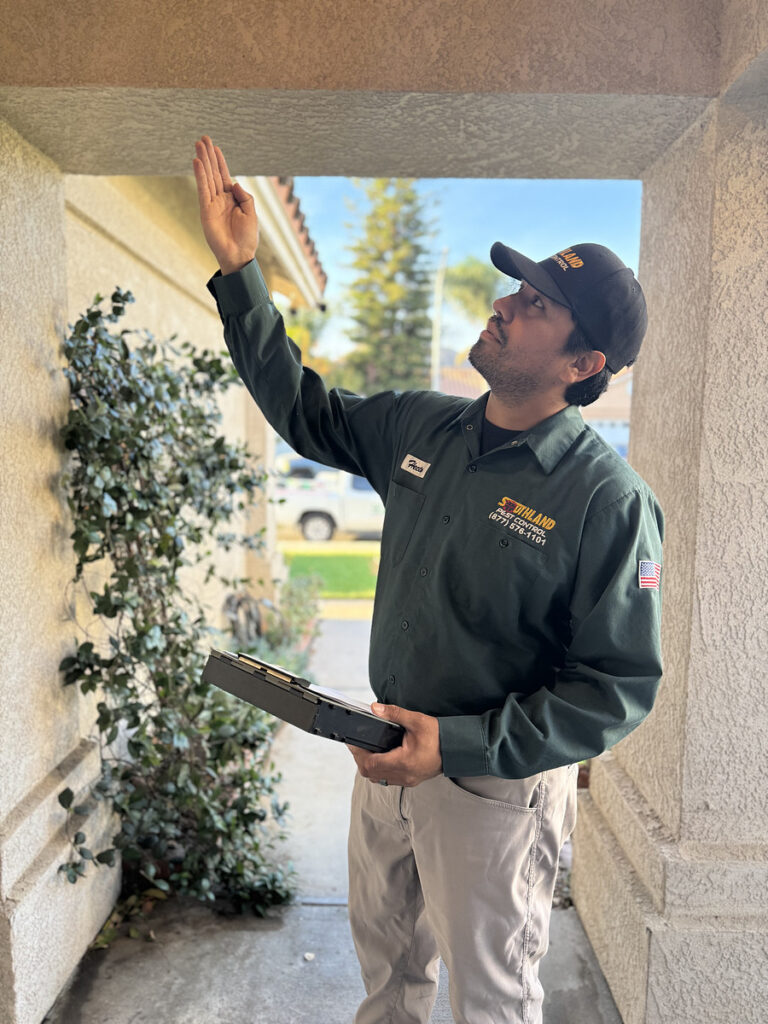
Technicians at Southland Pest Control are highly trained and state-licensed, ensuring they have the expertise to handle any infestation effectively. Continuous education and training keep them updated on the latest pest control methods.
Follow-Up Treatment
After the initial treatment, we offer follow-up services to monitor the effectiveness of the treatment and address any recurring issues. Regular check-ups ensure a long-term solution to problems.
Emergency Service
Southland Pest offers comprehensive, customized pest control services throughout Wildomar, CA, serving both residential and commercial clients. Their team of highly trained, state-licensed technicians brings decades of experience and the latest, environmentally responsible pest management technologies to every job. Whether you’re facing an infestation of ants, bed bugs, cockroaches, termites, or rodents, they begin with a thorough inspection to diagnose the root cause of the problem and then craft a tailored treatment plan that fits your specific needs.
Pest Control Services We Offer in Wildomar, CA
Emergency Pest Control in Wildomar
Don’t let a pest problem spiral out of control. Whether you’re dealing with ants, rodents, or other invaders, waiting only makes things worse. Our emergency pest control team responds fast to protect your Wildomar home.
Call now for same-day service and stop pests before they spread further.
Wildomar Pest Control FAQs
What pests are most common in Wildomar?
Termites and ants top the list across all of Wildomar. Drywood termites are concentrated in the older Sedco Hills and Windsong Valley neighborhoods, while subterranean termites are more common in newer builds where irrigation keeps soil moisture high. Argentine ant supercolonies are active in essentially every neighborhood with landscape irrigation. Rodents — particularly roof rats from the foothills — are a consistent problem in hillside-adjacent homes. Mosquitoes peak near The Farm ponds and low-lying areas from spring through fall.
Why do rodents keep coming back after treatment?
In Wildomar, the answer is almost always the mountain foothills. The Santa Ana Mountains function as a permanent reservoir of rodent population pressure, and unless entry points into your home are physically sealed, treated rodents are simply replaced by new ones moving down from the hillside. Effective rodent control in Wildomar requires both treatment and exclusion — closing off every gap, crack, and utility penetration that rodents can use to re-enter. We combine both in every rodent service we provide.
Does The Farm have worse pest problems than other Wildomar neighborhoods?
Different, rather than worse — but the differences are significant. The combination of working citrus groves, fishing ponds, and 600 acres of irrigated common area creates concentrated gopher, mosquito, and ant pressure that most suburban neighborhoods don’t experience. Gopher tunneling under citrus root zones is especially destructive. Residents whose lots back onto the grove perimeter or face the fishing ponds typically need more frequent service than those in standard tract neighborhoods.
Are scorpions a real concern in Wildomar?
Yes, particularly in hillside and semi-rural properties along the Bundy Canyon and Clinton Keith corridors, and in any neighborhood that backs onto open canyon or foothill scrub. Scorpions shelter in block wall gaps, retaining wall cavities, rock features, and irrigation valve boxes. They’re most active from late spring through early fall and become more visible when outdoor temperatures drop at night and they seek warmth. Regular perimeter treatment significantly reduces their presence and eliminates much of the spider prey population they depend on.
When is mosquito season in Wildomar?
Mosquito activity in Wildomar typically begins in March or April and runs through October, peaking in July and August. Properties near The Farm ponds, low-lying flood basins, horse troughs, or any standing water source experience the highest pressure. Western Riverside County Vector Control District treats public water bodies, but private property and HOA-managed water features fall outside their scope. Professional mosquito treatment during the active season is the most reliable way to protect outdoor living areas.
When is termite season in Hemet, CA?
My home is newer — do I still need pest control?
New construction in Wildomar is actually more vulnerable to certain pests than you might expect. Argentine ants colonize fresh landscaping immediately. Subterranean termites attack soil around new foundations as soon as irrigation begins. Any active construction within a half-mile of your property displaces rodents, gophers, and ants that move toward finished homes. The warranty protections on new construction don’t extend to pest damage — establishing a preventative treatment program from the beginning is far less expensive than addressing a full infestation later.
How often should a Wildomar home be treated?
Quarterly service is the standard starting point for most Wildomar homes. The warm inland climate keeps ants, cockroaches, spiders, and other general pests active year-round, and quarterly barrier maintenance prevents them from establishing indoors between visits. Homes in hillside areas or backing onto open land — especially along the Bundy Canyon corridor — often benefit from bi-monthly service during summer. The Farm and other properties with unique environmental factors may need customized schedules. We assess each property individually and recommend a plan based on actual conditions rather than a one-size approach.
Schedule Pest Control Service in Wildomar Today
Don’t wait for a pest problem to get worse. Southland Pest Control’s licensed technicians are ready to inspect your Wildomar home or business, identify exactly what you’re dealing with, and build a treatment plan that gets results.
We serve all Wildomar neighborhoods — from Sedco Hills and The Farm to Canyon Hills and the hillside corridors along Bundy Canyon Road — with fast response times and a 100% satisfaction guarantee.
📞 Call: (951) 653-7964
Serving Wildomar (92595, 92596), Lake Elsinore, Murrieta, Temecula, and all of Southwest Riverside County.