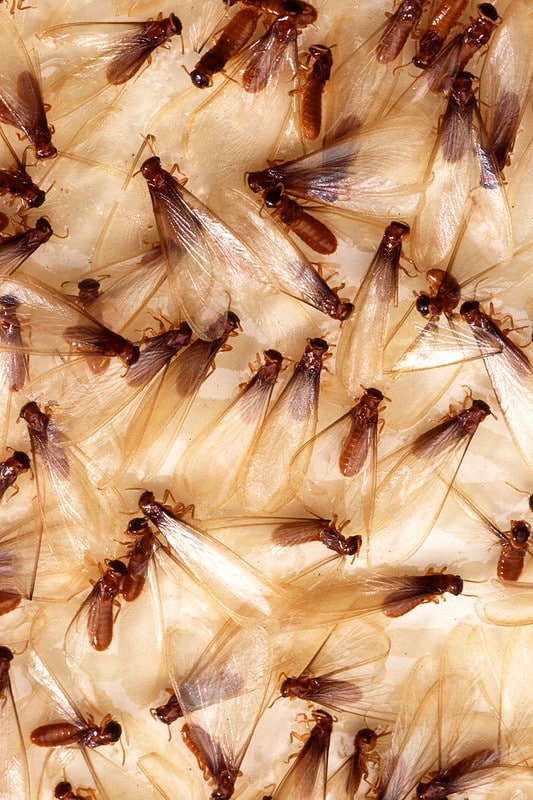
A termite swarm happens when winged termites leave a mature colony to reproduce and start new colonies.
These flying termites, called alates, push through cracks and openings to reach open air, and they often gather near windows or lights because they are attracted to brightness. Termites swarm only after the colony grows large enough and weather conditions become warm and humid.
If you see a termite swarm around your home, it usually means a well-established colony is living nearby or inside your structure.
What Is a Termite Swarm in the Termite Life Cycle?
A termite swarm marks the reproductive stage of the termite life cycle. Colonies produce special winged termites called alates once they mature.
Then:
- The winged termites fly out
- They pair off
- They shed their wings
- They start new colonies
According to the University of Maryland Extension, termite swarmers are winged reproductive termites that leave a mature colony on warm days to mate and establish new colonies. Swarming usually happens when temperatures rise and humidity levels increase, which helps the termites survive during flight. Therefore, when you see flying termites around your home, it often signals that a mature colony is nearby.
Because swarming depends on weather, Riverside’s mild climate can extend swarm season longer than colder states.
When Do Termite Swarms Happen in Riverside, CA?
Subterranean termites, which are common in Southern California, usually swarm from late winter through spring. However, warm fall days can also trigger activity.
Swarms often happen:
- After rainfall
- On warm afternoons
- When winds stay calm
- Near sunset
Since Riverside stays warm most of the year, termites remain active longer. Therefore, homeowners should stay alert year-round.
What Does a Termite Swarm Look Like?
Termite swarms look like flying ants at first. However, key differences help you identify them correctly.
Termite swarmers have:
- Equal-length wings
- Straight antennae
- Thick, straight bodies
- Light brown or tan coloring
Flying ants have:
- Uneven wing sizes
- Bent antennae
- Narrow waists
- Darker bodies
Additionally, you may find piles of discarded wings near windows or doors. This often means swarmers entered your home and shed their wings inside.
What Is a Termite Swarm Telling You?
A termite swarm tells you the colony is mature. Mature colonies can contain thousands or even millions of termites.
Swarmers do not eat wood. However, worker termites inside the colony continue feeding every day.
Therefore, if you see swarmers, damage may already exist.
Common signs of termite activity include:
- Mud tubes along foundations
- Hollow-sounding wood
- Cracked or bubbling paint
- Soft wood around window frames
According to Orkin’s termite lifecycle guide, swarmers leave the colony only after it reaches a certain size and stability. That means swarming usually happens after years of hidden feeding.
Do Termite Swarms Mean You Have an Infestation?
Often, yes. If swarmers appear inside your home, a colony may already exist in your structure.
However, swarmers outside do not always mean your house is infested. They may come from nearby soil or wood piles.
Still, you should never ignore them.
Because termites hide inside walls and foundations, professional inspection provides the safest answer.
How Long Does a Termite Swarm Last?
A termite swarm usually lasts 20 to 40 minutes. After that, most swarmers die quickly or find mates.
However, the short swarm event does not mean the problem ends. The parent colony remains active underground or inside wood.
Therefore, the real threat continues even after swarmers disappear.
Why Termite Swarms Are Common in Southern California
Southern California creates ideal termite conditions. Warm temperatures, moderate moisture, and slab foundations support subterranean colonies.
Additionally, irrigation systems keep soil moist near homes. Moist soil attracts termites.
Because Riverside rarely experiences long freezes, termite colonies survive year after year.
What to Do If You See a Termite Swarm
Act quickly if you notice swarmers indoors. First, collect a few specimens if possible. Then, contact a pest professional for identification.
Avoid spraying random insecticide. Surface sprays kill swarmers but not the colony.
Instead, schedule a professional inspection.
Southland Pest provides expert termite inspections and treatment plans tailored for Riverside homes. Learn more about our termite services here.
Professional treatment targets the colony source, not just visible insects.
How Professionals Treat Termite Colonies
Experts use proven systems to eliminate termite colonies.
Treatment options may include:
- Soil barrier treatments
- Baiting systems
- Wood treatments
- Ongoing monitoring
First, technicians inspect foundation areas and crawl spaces. Then, they design a plan that eliminates active colonies and prevents new ones.
Because termites remain hidden, targeted treatment ensures long-term protection.
Can You Prevent Termite Swarms?
You cannot completely stop natural swarming behavior. However, you can reduce the chance termites settle near your home.
Take these steps:
- Fix water leaks immediately
- Improve drainage around your foundation
- Remove wood-to-soil contact
- Keep mulch several inches away from siding
- Schedule annual inspections
Regular inspections catch colonies early. Therefore, prevention saves money over time.
Final Answer: What Is a Termite Swarm?
What is a termite swarm? A termite swarm is a group of winged termites leaving a mature colony to reproduce and start new colonies. While the swarm itself is brief, it signals a larger hidden colony nearby.
In Riverside, CA, termite swarms often mean year-round termite pressure. Because damage can begin long before you see swarmers, early inspection matters.
If you see flying termites or discarded wings, do not wait. Contact Southland Pest today for a professional termite inspection.
Our experienced Riverside team will inspect your home and protect it from costly termite damage.