
Pest Control in San Jacinto, CA
Southland Pest Control provides state-licensed pest management for San Jacinto homeowners and businesses. From termites and rodents to ants and mosquitoes, we understand the specific conditions that San Jacinto's mountain valley setting, San Jacinto River corridor, and steadily expanding residential grid create — and we have the treatments to match.

Get Your FREE Quote
Why Pests Never Take a Season Off in San Jacinto
San Jacinto sits at the floor of the San Jacinto Valley, flanked on the northeast by the base of Mount San Jacinto and bordered on the west by the San Jacinto River floodplain. The city covers roughly 26 square miles and is home to around 55,000 residents spread across a housing stock that includes 1940s downtown properties, mid-century subdivisions, 2000s-era planned communities, and new construction still underway along the city’s eastern and northern edges. That geographic diversity — old homes next to open agricultural land, a river corridor cutting through the western edge, and mountain terrain pressing against newer subdivisions — creates a uniquely layered set of pest pressures.
Summer temperatures in San Jacinto regularly exceed 100 degrees, driving every pest species toward irrigated landscaping and air-conditioned interiors. The San Jacinto River floodplain generates moisture pockets, standing water, and organic-rich soil that produce mosquito breeding habitat and sustained subterranean termite activity regardless of what the rest of the valley looks like. Winter rains trigger termite swarming events and push rodents indoors through gaps that are never sealed in the warmer months. San Jacinto also continues to grow — new construction along the mountain edge constantly displaces established wildlife populations, sending gophers, rodents, and ants into finished neighborhoods with every new grading project.
- Fully Licensed & Insured
- Locally Owned & Operated
- 5 Star Rated Service
- Customer Satisfaction Guarantee
- Emergency Services Available
- Professional Trained Technicians

Pest Activity by San Jacinto Neighborhood
Downtown San Jacinto and Historic Core:
The oldest residential areas in the city, with homes dating back to the early 1900s in some blocks. Drywood termites have been working through fascia boards, window framing, and attic structures in these homes for decades. Cockroaches use aging plumbing chases and utility penetrations that have never been sealed. Rodents exploit foundation gaps and weatherstripping that has deteriorated through years of expansion and contraction in the valley heat. Homes in this part of the city tend to carry the city's highest accumulated pest load — consistent professional treatment is the only reliable way to manage it.
Rose Ranch, De Anza, and Soboba Springs:
Mid-city planned communities with established HOA landscaping, irrigated turf, and mature trees — conditions that sustain large Argentine ant supercolonies year-round. Gophers are a persistent problem throughout the irrigated common areas and private lawns in these neighborhoods. Black widows and scorpions establish in block wall cavities, rock landscaping features, and irrigation valve boxes, particularly on lots that back up to undisturbed open space. The Soboba Springs area, near the golf course and casino resort grounds, sees elevated moisture from adjacent irrigation that amplifies ant and gopher pressure.
Near the San Jacinto River and Valley Wide Regional Park:
The western fringe of the city, where residential development sits closest to the San Jacinto River floodplain and Valley Wide Regional Park, experiences a category of pest pressure that the rest of the city does not. The river corridor produces seasonal standing water, organic-rich soil, and dense riparian vegetation that function as a mosquito breeding reservoir from spring through fall. Roof rats nest in riverbank vegetation and move into adjacent homes along fence lines and irrigation infrastructure. Gnats, biting midges, and flies breed in damp organic material along the floodplain edge. Properties within two to three blocks of the river corridor typically need more frequent service than those in the city's interior.
Mountain Bridge, Sunrise Ranch, and Newer Subdivisions:
Homes built in the 2000s and ongoing new construction along the mountain edge of San Jacinto face the construction-era pest pressure that comes with rapid development against open terrain. Argentine ants establish in fresh landscaping immediately. Subterranean termites attack irrigated foundation soil during the first growing season. Any grading on adjacent undeveloped parcels — which is constant in this part of the city — displaces gophers, ground squirrels, and rodents that migrate directly into finished lots. Mountain-facing properties also experience higher scorpion and spider pressure as their habitat on the foothill edge of the valley is converted to residential use.
Heritage, Equestrian Downs, and Agricultural Edge Properties:
The southeastern portion of San Jacinto, where residential neighborhoods border active horse properties, agricultural parcels, and open ranch land, faces a different combination of pests than the city's tract neighborhoods. Fly infestations associated with livestock and organic waste are a recurring seasonal problem. Ground squirrels and gophers move freely between agricultural parcels and residential yards. Roof rats nest in stored hay, equipment sheds, and mature tree canopies before expanding into adjacent homes. These edge properties need a pest management approach calibrated for the unique intersection of suburban and agricultural pest sources.
Pest Pressure by Property Type in San Jacinto
Where you live in San Jacinto — and what your home’s age and surroundings look like — determines which pest threats are most likely to show up first. Here is a breakdown of what each property type typically faces and what Southland Pest Control does to address it.
| Downtown & Historic San Jacinto (Pre-1990s) | Rose Ranch, De Anza & Soboba Springs | Near San Jacinto River & Valley Wide Park | Mountain Bridge & Newer Developments |
|---|---|---|---|
| Drywood termites entrenched in aging wood framing, window trim, and fascia on homes built before the 1990s | Gophers tunneling through established landscaping and irrigated turf throughout mid-city subdivisions | Mosquitoes breeding in San Jacinto River floodplain, seasonal standing water, and drainage retention areas | Subterranean termites drawn to moist foundation soil during irrigation season on newly graded lots |
| Cockroaches moving through legacy plumbing and utility penetrations in older single-family structures | Argentine ant supercolonies spreading through HOA-managed turf, medians, and shared landscape irrigation | Roof rats and mice nesting in riparian vegetation along the river corridor and moving into adjacent homes | Argentine ant supercolonies establishing immediately in fresh mulch and sod before landscaping is complete |
| Rodents nesting in deteriorated insulation and wall voids of structures with decades of settled foundations | Black widows and scorpions sheltering in block wall cavities, irrigation boxes, and rock landscaping features | Gnats, flies, and biting insects breeding in organic-rich riverbed soil and pooled water in adjacent parcels | Gophers destroying newly graded sod and ornamental landscaping on recently completed residential lots |
Older Homes in Downtown and Historic San Jacinto
The housing stock in downtown and historic San Jacinto is among the oldest in Riverside County’s inland communities, with some blocks featuring homes built before World War II. Drywood termite colonies in these structures have had generations to spread laterally through connected attic framing, fascia boards, and window assemblies — by the time homeowners notice visible damage or frass, the colony typically extends far beyond the visible entry point. Cockroaches in these older homes use plumbing chases and utility conduits as protected corridors that connect interior living areas to the exterior without ever crossing open surfaces. Rodents exploit foundation gaps and structural penetrations that have widened through decades of soil movement and thermal cycling in the valley heat. A thorough inspection of any downtown San Jacinto home will almost always reveal active pest activity that has been present for years.
Rose Ranch, De Anza, Soboba Springs, and Mid-City Subdivisions
These planned communities from the 1990s and 2000s bring together large HOA-managed irrigated landscapes, golf course proximity, and established tree canopies — all of which sustain significant Argentine ant supercolony networks year-round. Supercolonies in this part of San Jacinto can span multiple residential blocks of connected turf and landscaping, making perimeter-only treatment at the property level only partially effective without addressing the broader colony network. Gopher pressure is persistent on any irrigated lawn, particularly near the Soboba Springs golf course corridor where adjacent open turf provides continuous foraging territory. Black widows accumulate in block wall cavities and rock features on properties that go without regular perimeter treatment for more than a few months.
River Corridor and Valley Wide Park Adjacent Properties
The San Jacinto River floodplain is the most ecologically active pest zone in the city. Seasonal water flow, permanent moisture pockets in the riverbed soil, and dense riparian brush create breeding habitat that mosquito populations exploit from March through October regardless of how dry the surrounding valley becomes. The river corridor also harbors a large and stable roof rat population that colonizes riparian brush and moves into adjacent homes opportunistically. Riverside County Vector Control District treats standing water in some areas of the floodplain, but their jurisdiction does not extend to private property adjacent to the river, and treatment of public water bodies does not prevent mosquitoes from breeding in standing water on private lots or in irrigation infrastructure within two to three blocks of the corridor. Properties in this zone need a tailored treatment plan that accounts for the proximity to a persistent external breeding source rather than standard quarterly service.
Mountain Bridge, Newer Builds, and Mountain-Edge Subdivisions
New construction against the San Jacinto Mountain foothills creates a front-line exposure to pest species that are being displaced from their original habitat by grading operations. Argentine ants colonize fresh mulch and irrigated sod almost immediately after installation — in some cases before the grading equipment has left the adjacent lot. Subterranean termites attack moist foundation soil during the first irrigation season, well before any wood-to-soil contact issues develop. Scorpions move into finished structures when foothill terrain is disturbed, and they establish in block wall construction and exterior voids where they are difficult to locate without a thorough inspection. Ground squirrels displaced from graded open land are destructive to irrigated slope landscaping and can cause significant erosion on lots that border undeveloped foothill parcels. Starting a preventative pest program in the first year of occupancy in these neighborhoods is far less costly than addressing established infestations after the first summer.
Common Pests We Eliminate in San Jacinto
| Ants | Bed Bugs | Bees |
| Cockroaches | Fleas | Gophers |
| Mice | Mosquitoes | Rats |
| Scorpions | Spiders | Termites |
| Wasps |
Southland Pest Control covers every part of San Jacinto — from the historic downtown core and mid-city subdivisions to the river corridor properties and the newest mountain-edge developments. We serve all San Jacinto zip codes and bring specific knowledge of the valley’s unique pest geography to every property we treat.
We also serve neighboring communities including Hemet, Perris, Menifee, Winchester, and Beaumont. Call today for a free inspection and estimate.
Get Your Free San Jacinto Pest Quote
Our state-licensed technicians serve every San Jacinto neighborhood — from the historic downtown and Rose Ranch to the river corridor properties and mountain-edge developments along the foothills. Free inspections. Free estimates. Call today.
Licensed Technicians
Technicians at Southland Pest Control are highly trained and state-licensed, ensuring they have the expertise to handle any infestation effectively. Continuous education and training keep them updated on the latest pest control methods.
Follow-Up Treatment
After the initial treatment, we offer follow-up services to monitor the effectiveness of the treatment and address any recurring issues. Regular check-ups ensure a long-term solution to problems.
Emergency Service
Neighborhoods We Serve in San Jacinto
Our technicians cover all of San Jacinto, including:
| Downtown San Jacinto | Rose Ranch |
| De Anza | Soboba Springs |
| Heritage | Equestrian Downs |
| Sunrise Ranch | Spice Ranch |
| Mountain Bridge | Ramona |
| Valle Hermosa | Park Hill |
We also serve neighboring communities including Hemet, Perris, Menifee, Winchester, and Beaumont.
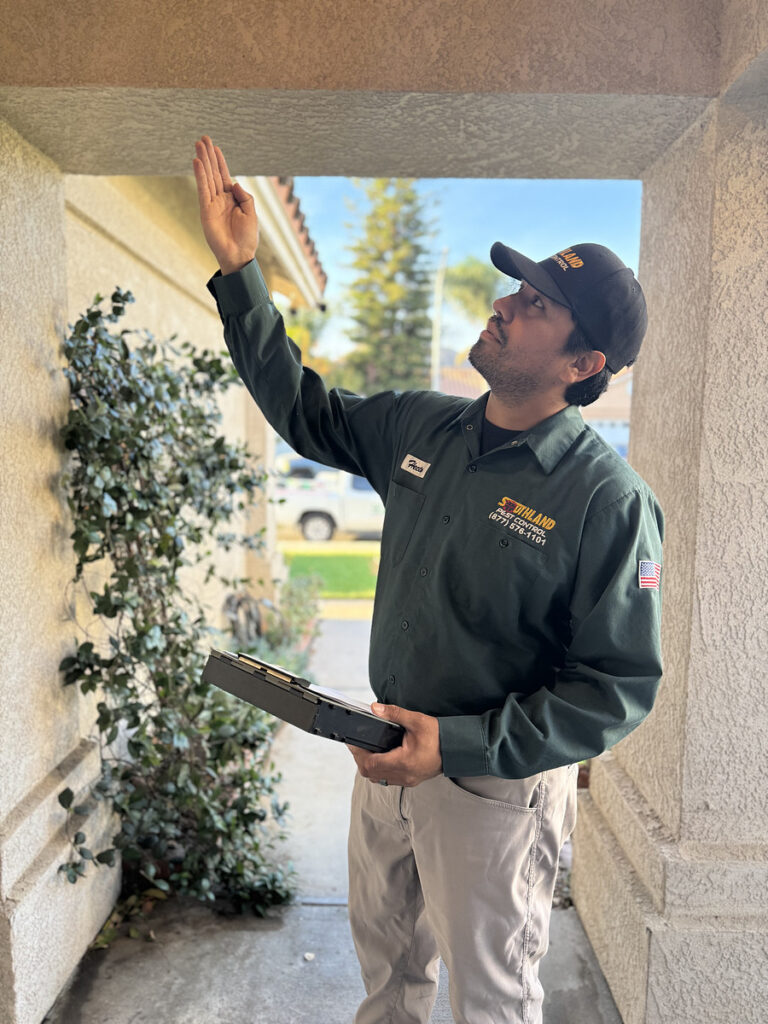
Southland Pest offers comprehensive, customized pest control services throughout San Jacinto, CA, serving both residential and commercial clients. Their team of highly trained, state-licensed technicians brings decades of experience and the latest, environmentally responsible pest management technologies to every job. Whether you’re facing an infestation of ants, bed bugs, cockroaches, termites, or rodents, they begin with a thorough inspection to diagnose the root cause of the problem and then craft a tailored treatment plan that fits your specific needs.
Common Pests We Eliminate in San Jacinto, CA
Emergency Pest Control in San Jacinto
Don’t let a pest problem spiral out of control. Whether you’re dealing with ants, rodents, or other invaders, waiting only makes things worse. Our emergency pest control team responds fast to protect your San Jacinto home.
Call now for same-day service and stop pests before they spread further.
San Jacinto Pest Control FAQs
What pests are most common in San Jacinto?
Termites and ants are the most widespread pest concerns across the city. Drywood termites are concentrated in older downtown housing stock where colonies have had decades to establish; subterranean termites are active citywide wherever soil irrigation keeps ground moisture elevated. Argentine ant supercolonies are present throughout every neighborhood with landscape irrigation. Rodents — particularly roof rats near the river corridor and mountain edge properties — are a persistent year-round issue. Mosquitoes are elevated near the San Jacinto River floodplain and Valley Wide Regional Park from spring through fall. Scorpions and black widows are common in block wall neighborhoods and along the foothill edge.
How does the San Jacinto River affect pest pressure near my home?
The river floodplain is the most concentrated pest source in San Jacinto. It produces standing water, moisture-retaining soil, and dense riparian brush that sustain mosquito breeding habitat regardless of how dry the surrounding valley becomes. Roof rats nest in riparian vegetation along the riverbank and move into adjacent homes along fence lines and irrigation infrastructure. Properties within two to three blocks of the river corridor consistently see higher mosquito, rodent, and gnat activity than homes further into the city interior. If your property is in this zone, standard quarterly service alone is unlikely to fully address the external pressure — a customized treatment plan that accounts for the river proximity is worth discussing.
Are termites a serious concern in San Jacinto?
Yes, significantly. San Jacinto’s climate — over 100-degree summer heat, mild winters, and seasonal rain — keeps both drywood and subterranean termite populations active in every month of the year. Drywood termites swarm in late summer and early fall, entering through attic vents, fascia gaps, and exposed wood. Subterranean termites are most active after winter rains when soil moisture is highest, and they can establish in foundation soil before any wood-to-soil contact damage is visible. Older homes in the downtown and historic core carry the highest accumulated termite risk in the city — some of these structures have never had a full inspection. Annual termite inspections are strongly recommended for any San Jacinto homeowner.
Why do I have so many ants no matter what I try?
Argentine ants form supercolonies — massively interconnected networks of workers and multiple queens that can span entire blocks of connected irrigated landscaping. In San Jacinto’s planned subdivisions with HOA-managed turf and shared irrigation, a supercolony may stretch across dozens of adjacent properties. When you spray ants indoors, you eliminate a small fraction of a colony network that extends far beyond your property line. Consumer products also trigger colony fragmentation, which disperses the problem rather than solving it. Effective control requires a professional barrier treatment that addresses the exterior environment and prevents foraging columns from accessing the structure, not just eliminating visible trails inside.
What is driving gopher activity in my yard?
Gophers thrive wherever there is irrigated turf and a soft soil root zone — which describes most maintained yards in San Jacinto. In mid-city subdivisions, the combination of HOA-irrigated common areas and adjacent undeveloped parcels provides continuous foraging territory. In newer neighborhoods along the mountain edge, ongoing construction grading displaces established gopher populations that move into finished lots looking for any irrigated root system. Gopher damage to irrigation lines, root zones, and slope landscaping can be significant within a single season. Trapping removes individual animals but does not address the population pressure from adjacent territory — professional gopher management requires both removal and ongoing perimeter monitoring.
Are scorpions common in San Jacinto?
Scorpions are present throughout San Jacinto but are most concentrated in two areas: properties that border the mountain foothills along the northeastern edge of the city, and neighborhoods with extensive block wall construction where cavities provide year-round harborage. As new development continues to push into foothill terrain, scorpions displaced from their previous habitat move into finished residential structures and establish in block wall cavities, irrigation boxes, retaining wall gaps, and attic spaces. Regular perimeter treatment significantly reduces scorpion presence and eliminates much of the spider prey population they depend on for food.
How often does a San Jacinto home need pest treatment?
Quarterly service is the starting baseline for most properties. San Jacinto’s heat keeps ant, cockroach, and spider populations active in every season, and quarterly barrier maintenance prevents them from re-establishing indoors. Properties near the river corridor, on the mountain foothill edge, or adjacent to open agricultural land typically benefit from bi-monthly service during summer and fall when outdoor pest pressure peaks. The age of your home is also a factor — structures built before 1990 often require more frequent inspection and treatment than newer builds because of accumulated pest entry points and deteriorated structural barriers. We evaluate each property individually before recommending a schedule.
Should I treat for pests before moving into a new San Jacinto home?
Strongly recommended. Pre-occupancy inspections in San Jacinto regularly uncover established termite activity, rodent harborage in attics or crawlspaces, and ant supercolony access points that were present before the home was listed. Treating before furniture and belongings are inside is faster, less disruptive, and more thorough than treating afterward. It also establishes a clean baseline — so any pest activity that appears after move-in can be addressed under a service guarantee rather than treated as a condition that existed before your occupancy began.
Schedule Pest Control Service in San Jacinto Today
Don’t wait for a pest problem to get worse. Southland Pest Control’s licensed technicians are ready to inspect your San Jacinto home or business, identify exactly what you’re dealing with, and build a treatment plan that gets results.
We serve all San Jacinto neighborhoods — from Downtown and Rose Ranch to Mountain Bridge and the San Jacinto River corridor — with fast response times and a 100% satisfaction guarantee.
📞 Call: (951) 653-7964
Serving San Jacinto (92582, 92583), Hemet, Perris, Menifee, and all of Riverside County.