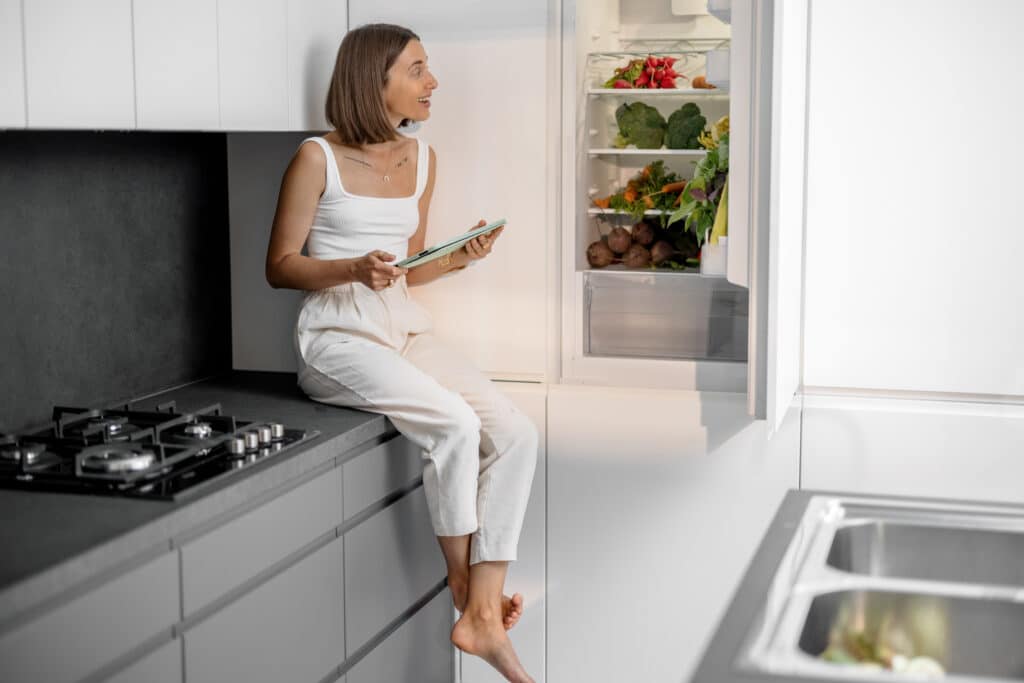
Short Answer: Refrigerator prep before tent fumigation comes down to three variables — how new the fridge is, what’s inside, and what your fumigator requires. For modern refrigerators with intact gaskets, double-bagging perishables in Nylofume bags is usually enough. For older units with worn seals, plan to remove most refrigerated foods entirely. Manufacturer-sealed items in glass, plastic, or metal containers can stay. The honest answer to ‘what do I do with my refrigerator before tent fumigation’ always comes back to your fumigator’s specific prep policy — confirm before tent day.
The night before a tent goes up, most homeowners realize they have hours to figure out what stays in the fridge, what gets bagged, and what has to leave the house entirely. That last-minute scramble is where mistakes happen — items get single-bagged instead of double, medications get forgotten, and gasket condition never gets checked. The fix is starting two days out — gasket check, item sort, medication relocation, all on a clean schedule rather than a rushed one.
What Do I Do With My Refrigerator Before Tent Fumigation? The Three Variables That Decide
Generally, the answer is not one rule. Specifically, three variables shape what you actually need to do:
- The age and seal condition of your refrigerator. A modern unit with intact factory gaskets seals well enough that double-bagged perishables stay safe inside. By contrast, an older unit with worn or cracked seals lets sulfuryl fluoride gas seep in around the door, which contaminates anything not in a manufacturer-sealed container.
- What’s actually inside the fridge. Open boxes of baking soda, half-finished jars of salsa, and produce in plastic bags all behave differently from a fully sealed bottle of soda or a vacuum-packed deli item. Therefore, the prep steps for each category are different.
- What your fumigator requires. Fumigation companies set their own prep policies based on the fumigant they use, the local regulations they follow, and the liability they carry. Some require all perishables to be removed. Others accept double-bagged storage. Always confirm before tent day.
Importantly, no single answer fits every home. The checklist below covers the most common Riverside scenarios, but your fumigator’s instructions override anything you read here.
How Vikane Gas Interacts With a Sealed Refrigerator
Tent fumigation in Southern California almost always uses sulfuryl fluoride, sold under the brand name Vikane. According to the EPA’s sulfuryl fluoride registration review, it is a colorless, odorless structural fumigant classified as a restricted-use pesticide. Furthermore, UC IPM guidance on whole-structure fumigation confirms that sulfuryl fluoride penetrates wood, drywall, fabric, and most plastics — which is why bagging is non-negotiable for anything you eat or take into your body.
Notably, modern refrigerator gaskets are designed to seal tightly against air infiltration for energy efficiency. That same tight seal also resists fumigant gas reasonably well. However, “reasonably well” is not “perfectly,” and the longer the tent stays up, the more gas finds a path in. As a result, the safest approach treats the refrigerator as a high-risk container, not a sealed vault.
In short, a working fridge with good seals adds a layer of protection. It does not replace bagging.
Step-by-Step Refrigerator Prep Checklist
In practice, the safest prep runs over 48 hours, not the night before. Therefore, start these steps two days out.
Two days before tent day
- Audit the gasket. Run a dollar bill around the seal of every door (refrigerator, freezer, deli drawer). If the bill slides out with no resistance anywhere along the seal, the gasket is worn. Plan to remove most perishables instead of bagging them.
- Eat down what you can. Any leftovers, half-used produce, or meal-prep containers are easier to consume than to bag and reload after the tent comes off.
- Inventory medications. List every refrigerated prescription: insulin, biologics, certain antibiotics, eye drops, breast milk. These do not stay in the home during fumigation, no matter how good the gasket is.
One day before tent day
- Sort what’s left into three piles. Stays without bagging: manufacturer-sealed glass, plastic, or metal containers. Stays double-bagged: opened items, leftovers, produce. Leaves the home: medications, breast milk, opened baby formula, and anything cheaper to replace than to bag.
- Pick up Nylofume bags from your fumigator. These are the nylon polymer bags rated for sulfuryl fluoride. Do not substitute Ziploc or trash bags — they are not gas-impermeable.
- Double-bag the “stays” pile. Put one bag inside another, fill the inner bag, twist the top of the inner bag, fold it over, and tape or twist-tie it shut. Repeat with the outer bag. Do not knot the bags — knots leak.
Tent morning
- Remove shelves to stack bags efficiently. Bagged items take more space than unbagged. Pulling shelves lets you stack vertically instead of leaving doors that won’t close.
- Move medications into a cooler with ice or to a friend’s refrigerator. Pharmacies in Riverside and the Inland Empire will sometimes hold prescriptions for 24-72 hours if you call ahead.
- Confirm with your fumigator one last time. Walk the kitchen with them or call to verify before keys hand over.
Riverside Heat Reminder
Daytime temperatures in May through September push 95°F+ in the Inland Empire. A cooler with ice in a parked car will not keep insulin viable for the 24-72 hours a tent is up. Always plan a real refrigerated location for medications.
What Stays vs What Must Go: A Decision Table
| Item category | Action | Notes |
|---|---|---|
| Manufacturer-sealed glass/plastic/metal (unopened) | Stays — no bagging needed | Original factory seal must be intact. Twist-off caps that have been opened do not count. |
| Opened condiments, sauces, dressings | Double-bag in Nylofume | Write the open date on the bag — many will need to go anyway |
| Produce (whole, unwashed) | Double-bag or eat down | Bagging works but produce decays fast in any prep delay |
| Leftovers and meal prep | Double-bag or discard | Food safety often makes discarding easier than bagging |
| Refrigerated medications (insulin, biologics) | Remove from home | No bag is sufficient; relocate to friend’s fridge or pharmacy hold |
| Breast milk | Remove from home | Same standard as medications — relocate, do not bag |
| Baby formula (powdered, sealed) | Stays — no bagging needed | If can is opened or scoop is in the can, double-bag |
| Pet food (kibble, opened bag) | Double-bag in Nylofume | Pet food counts as food — same rules apply |
| Ice cubes and ice maker contents | Discard before tent | Ice absorbs gas readily; refill after re-entry |
| Frozen meals (manufacturer-sealed) | Double-bag for safety | Even sealed packaging benefits from a Nylofume layer |
Special Cases: Insulin, Breast Milk, and Refrigerated Pet Medications
Above all, refrigerated medications are the single category where bagging is not sufficient. Insulin loses potency above its labeled storage range. Biologics break down. Certain antibiotics destabilize. The risk of trusting a bag for a 24-72 hour fumigation window is not worth the small inconvenience of relocating.
In practice, three relocation options work well in the Riverside and Inland Empire area:
- A friend’s or family member’s refrigerator. The simplest option. Confirm capacity in advance.
- Pharmacy hold. Many CVS, Walgreens, and independent pharmacies in Riverside will hold prescriptions for 24-72 hours if you ask. Call before tent day to confirm.
- A medical-grade cooler with ice packs. Only viable if you can refresh the ice packs every 8-12 hours and the cooler stays in a temperature-stable environment.
By contrast, a standard cooler with bagged ice in a 95°F garage is not a safe option for insulin or biologics in Inland Empire summer conditions.
Common Refrigerator Prep Mistakes (and How to Avoid Them)
Specifically, these are the prep mistakes that show up most often in Riverside fumigation jobs:
- Single-bagging instead of double-bagging. Industry guidance on Nylofume use specifies bags inside bags. One layer is not enough.
- Tying bags in knots. Knots leak under pressure. Use the twist-fold-tape method instead.
- Leaving the fridge unplugged “to save energy.” Most fumigators want the refrigerator running normally during the tent so the cold environment slows any food spoilage. Confirm with your team, but do not assume “off” is the right call.
- Forgetting medications until the morning of. Pharmacy holds often need 24+ hours notice. Plan two days ahead, not two hours.
- Not checking the gasket condition. A worn gasket converts a “double-bag and leave” scenario into a “remove most perishables” scenario.
- Skipping the fumigator confirmation call. Every company has its own prep policy. Do not assume the internet’s checklist matches yours.
After Fumigation: Refrigerator Re-entry Steps
Furthermore, the prep work continues after the tent comes off. Specifically:
- Wait for the fumigator’s clearance signal. Do not enter the home until your team has cleared it. The clearance reading confirms the gas has dispersed below the EPA re-entry threshold. The companion guide on how long termite fumigation takes explains the timing.
- Aerate aggressively. Open every window and door in the home for at least 1-2 hours, even if the fumigator already aerated.
- Open the refrigerator with the doors propped briefly before reaching in. Any residual gas in the small enclosed space dissipates quickly with the doors open.
- Inspect the bagged items. Look for tears, holes, or evidence of pet damage to the bags. Discard anything that smells off or where the bag integrity is questionable.
- Refill the ice maker and discard the first batch. The first round of ice after re-entry is not worth the risk.
In short, the re-entry sequence is the second half of the same prep job. Do not shortcut it because the home looks fine.
When to Call Southland Pest Control for Riverside Fumigation Prep Help
If you have a tent fumigation scheduled and the prep checklist feels overwhelming, our team can walk you through it during the pre-fumigation site visit. Specifically, our tent fumigation services include pre-job planning that covers refrigerator prep, medication relocation, and gasket assessment. By contrast, if you are still deciding between fumigation and a localized treatment, the broader termite control page lays out the options. Either way, a call to schedule a fumigation prep walkthrough ahead of tent day removes the night-before scramble. For a complete companion list covering food, medicine, and household items beyond the refrigerator, our complete fumigation prep checklist covers every category in detail.
FAQ
Can I leave my refrigerator running during tent fumigation?
Generally, yes — most fumigators in Southern California want the refrigerator running normally during the tent. Specifically, the cold environment slows any spoilage and the sealed gaskets continue to do their job. Furthermore, an unplugged refrigerator warms up over a 24-72 hour tent window, which compromises any double-bagged items that depend on cold storage. However, your specific fumigator may have a different policy, so confirm during the pre-fumigation walkthrough.
Do sealed soda cans need to be bagged before fumigation?
Notably, no. Manufacturer-sealed glass, plastic, and metal containers with intact factory seals can stay in the refrigerator without bagging during tent fumigation. Specifically, the original factory seal blocks gas penetration. By contrast, any container that has been opened — even once — needs to be double-bagged in Nylofume bags or removed from the home entirely.
What if my refrigerator gasket is cracked or worn?
Specifically, a worn gasket changes the prep approach significantly. Therefore, when the dollar-bill test fails along any part of the seal, plan to remove most refrigerated foods rather than relying on the gasket plus bagging. Additionally, replace the gasket after fumigation if the unit is worth keeping — a worn gasket also drives higher energy bills and reduces refrigerator efficiency in everyday use.
Can prescription medications stay in the fridge during fumigation?
Above all, no. Specifically, refrigerated medications including insulin, biologics, certain antibiotics, eye drops, and breast milk should leave the home entirely during tent fumigation. Furthermore, no bag is rated as a substitute for medication storage during a multi-day fumigation. Plan to relocate to a friend’s refrigerator, ask your Riverside pharmacy about a 24-72 hour hold, or use a medical-grade cooler with refreshed ice packs in a temperature-stable location.
How long should I wait to use my refrigerator after the tent comes off?
Generally, the refrigerator is safe to use as soon as your fumigator clears the home for re-entry. However, prop the refrigerator and freezer doors open for a few minutes before reaching in to clear any residual gas from the enclosed space. Furthermore, discard the first batch of ice from the ice maker after re-entry — ice readily absorbs gas, and a fresh round costs nothing.
Will Southland Pest Control provide the Nylofume bags for refrigerator prep?
Specifically, yes — our team provides the rated Nylofume bags for any home we tent. By contrast, do not substitute Ziploc, freezer bags, or trash bags. These are not gas-impermeable and will not protect food during a sulfuryl fluoride fumigation. If you are unsure how many bags you need, count the items in your “stays double-bagged” pile and double the count to allow for the inner-and-outer-bag method.