
You spotted a wasp nest on your property. Maybe it is tucked under the eave of your roof. Maybe it is hanging from a backyard tree or wedged into a gap in your fence. Your first instinct is probably to grab a can of spray and handle it yourself.
Sometimes that is fine. Other times it puts you in serious danger.
The difference comes down to the type of wasp, the size of the nest, and where it is located. Getting that wrong is how a routine backyard chore turns into a medical emergency.
The Short Answer
Small, exposed nests from paper wasps with low activity can often be handled with a DIY approach using the right precautions. Yellowjacket nests, large established nests, nests inside walls or structures, and any nest near someone with a sting allergy should always be handled by a licensed pest control professional. When in doubt, do not attempt removal yourself.
Here is what every Riverside homeowner needs to know before approaching a wasp nest in 2026.
Know What You Are Dealing With Before You Do Anything
Not all wasps in Riverside behave the same way, and not all nests carry the same risk. Identifying what type of nest you have is the single most important step before deciding how to proceed.
Paper Wasps
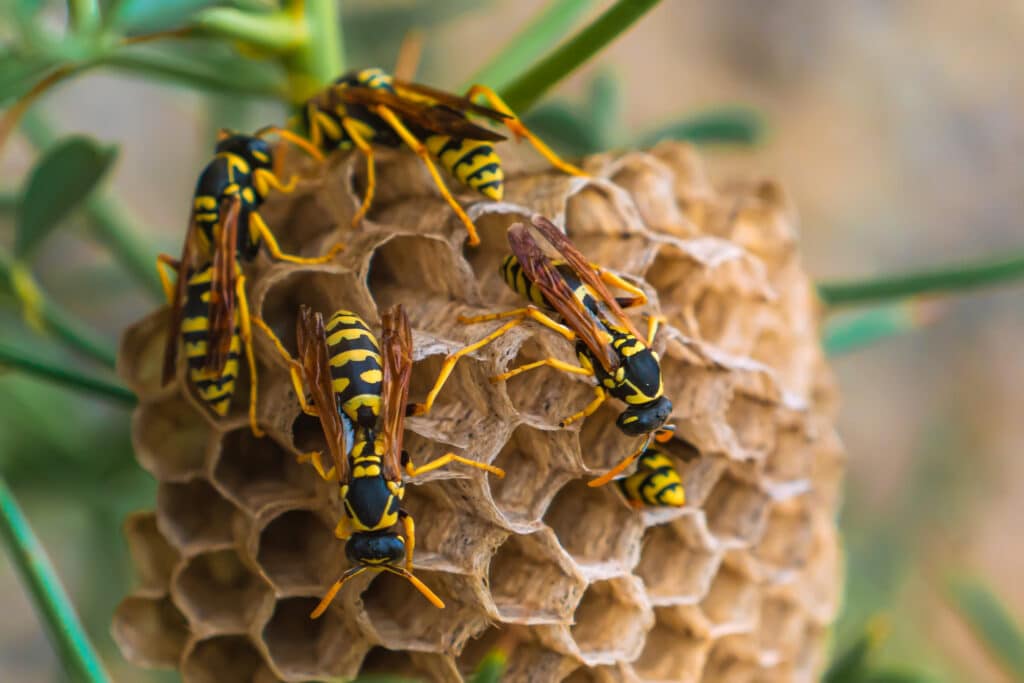
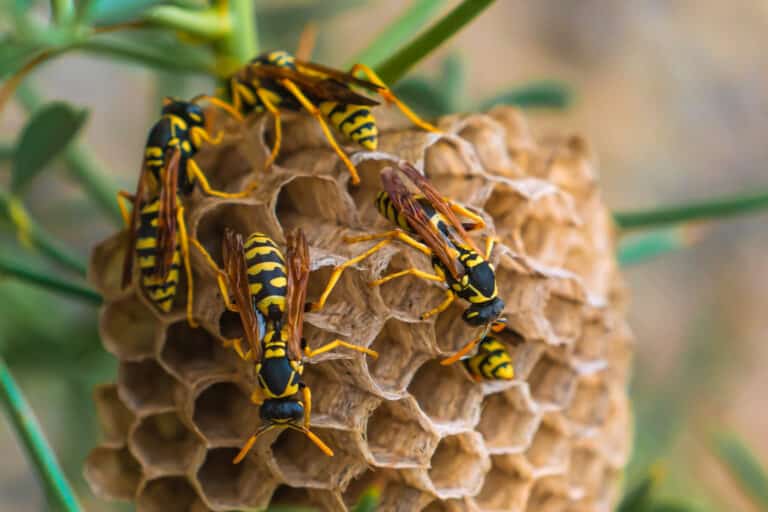
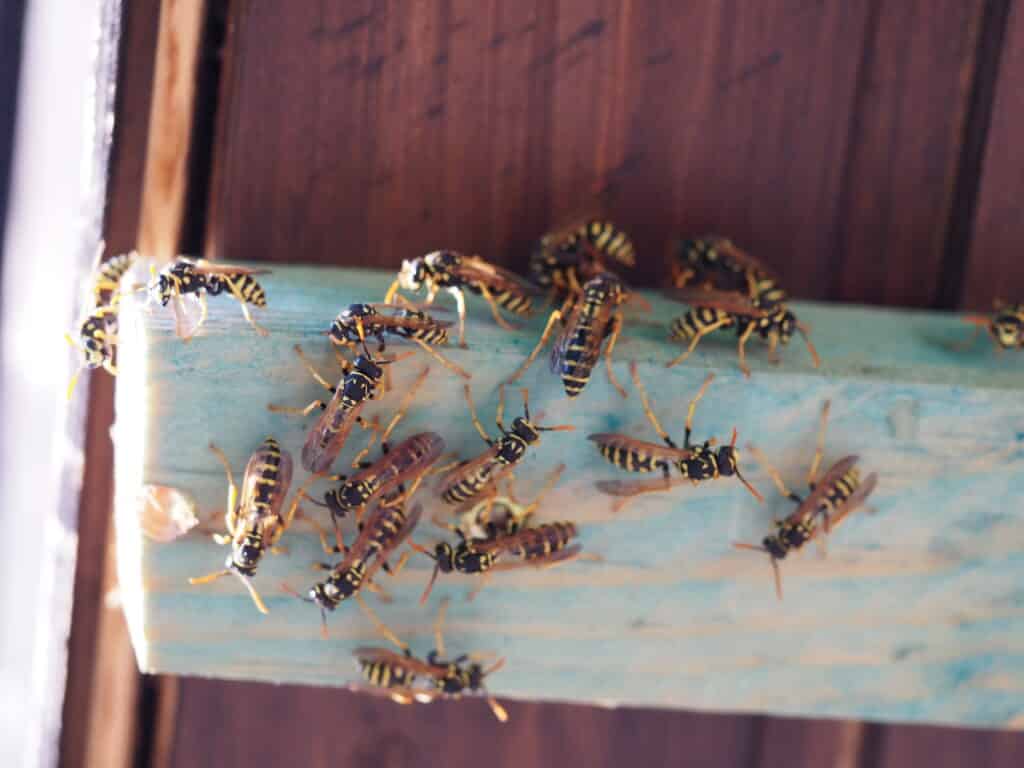
Paper wasps build open, umbrella-shaped nests with visible hexagonal cells. They are typically tan or brown and hang from overhangs, eaves, fences, and tree branches. Paper wasps are relatively docile unless the nest is directly disturbed. Colonies are smaller, usually fewer than 100 individuals. These are the nests most commonly handled with DIY removal.
Yellowjackets
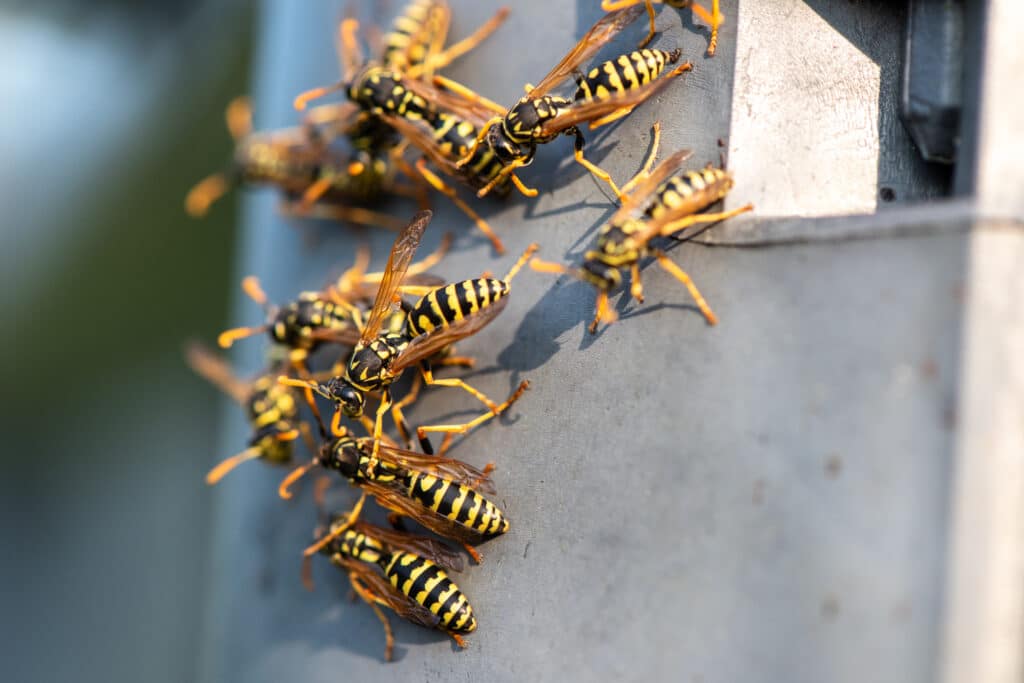
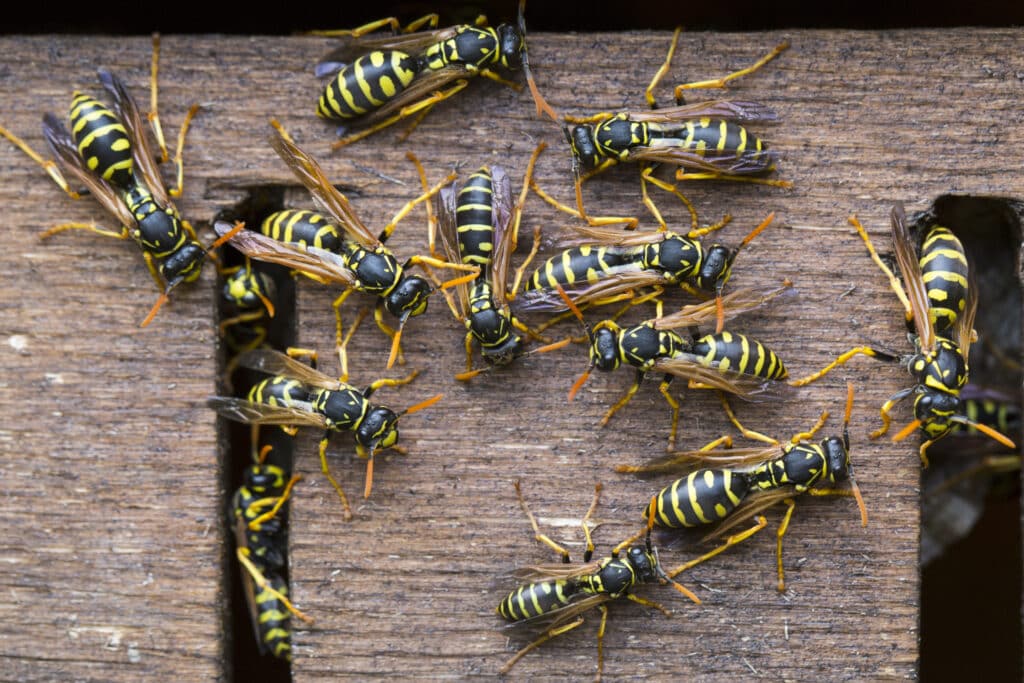
Yellowjackets are far more aggressive. They build enclosed, papery nests that can be found in ground burrows, wall voids, attic spaces, or hanging from structures. Colony sizes grow throughout the summer and can reach several thousand individuals by fall. Yellowjackets defend their nests aggressively and will chase a perceived threat a significant distance. These are not DIY nests.
Mud Daubers
Mud daubers build small, tube-shaped nests made of hardened mud, typically on walls, ceilings, and under eaves. They are solitary wasps, rarely sting, and do not defend their nests. Empty mud dauber nests can be scraped off surfaces without any real risk.
According to the UC Integrated Pest Management Program, yellowjackets are the primary wasp pest in California, and if wasp nests must be eliminated, it is easiest and safest to call for professional help. That recommendation exists for good reason.
When DIY Wasp Nest Removal Is Reasonable
DIY removal is a realistic option only when all of the following conditions are true:
- The nest is a paper wasp nest, not a yellowjacket nest
- The nest is small — fewer than two or three layers of comb
- The nest is in an exposed, easily accessible location
- The nest is away from doorways, high-traffic areas, and children’s play areas
- Nobody in your household has a known allergy to wasp stings
- You can treat the nest at night when wasps are inactive and less aggressive
If every one of those conditions is met, here is how to approach it safely.
Step 1: Treat at Night
Wasps are significantly less active after dark. Treating a nest at night reduces the number of wasps that will respond to the disturbance. Use a red-lens flashlight if you need visibility — wasps cannot see red light the way they see white light.
Step 2: Wear Protective Clothing
Cover as much skin as possible. Long sleeves, long pants, gloves, and closed-toe shoes are the minimum. Tuck pants into socks and sleeves into gloves. A face covering is strongly recommended. Do not treat a wasp nest in shorts and a t-shirt regardless of how small the nest appears.
Step 3: Use a Wasp-Specific Aerosol Spray
Use a product specifically designed for wasp and hornet nests, not a general insecticide. These products are formulated to spray at distance — typically 15 to 20 feet — so you can treat the nest without being directly next to it. Apply directly into the nest opening and soak the comb thoroughly.
Step 4: Do Not Stand Directly Below the Nest
Position yourself to the side of the nest, never directly underneath it. If wasps respond aggressively, you need a clear path to retreat. Do not run toward enclosed spaces like garages or sheds — wasps will follow you in.
Step 5: Leave the Nest for 24 Hours Before Removing
Even after treatment, surviving wasps may remain in or around the nest for up to 24 hours. Do not attempt to physically remove the nest immediately after spraying. Return the following night to confirm activity has stopped, then remove and dispose of the nest in a sealed bag.
When to Call a Professional — No Exceptions
There are situations where DIY wasp removal is not just inadvisable — it is genuinely dangerous. Do not attempt removal yourself in any of the following circumstances.
The nest is inside a wall, ceiling, or attic.
Spraying the exterior entry point of a wall nest does not reach the colony. It agitates wasps without eliminating them, and can drive them to find new exit points — sometimes into the interior of your home. Wall nests require professional treatment from a licensed technician who can access and treat the full cavity.
The nest is large or well-established.
A nest that has been growing since spring can house thousands of wasps by late summer or fall. The sheer number of individuals that respond to a disturbance at that size makes DIY removal extremely high risk regardless of the species.
You cannot identify the species.
If you are not certain whether you are dealing with paper wasps or yellowjackets, treat it as a yellowjacket nest until proven otherwise.
Anyone in your household has a sting allergy.
Anaphylaxis from wasp stings can be life-threatening. A single sting triggering an allergic reaction during a DIY removal attempt is not a risk worth taking under any circumstances.
The nest is near a doorway, HVAC unit, or utility box.
Nests in high-traffic locations mean any routine activity near the entry point can trigger defensive behavior. These need to be removed quickly and completely by a professional.
What Happens If You Leave a Wasp Nest Alone
Wasp colonies in Riverside naturally decline in the late fall and winter as temperatures drop. The queen overwinters and starts a new colony the following spring, typically in a different location. The old nest is not reused.
This means an untreated nest may resolve itself seasonally — but waiting carries real risks. A nest near a door or play area puts your family at risk of accidental disturbance throughout the active season. A nest inside a wall can grow large enough to cause structural issues or give wasps access to your living space. And a queen that successfully overwinters on your property is likely to build a new nest nearby the following year.
Removing the nest eliminates the immediate risk and reduces the likelihood of a recurrence in the same area next season.
Professional Wasp Removal in Riverside, CA
Southland Pest Control provides wasp removal services throughout Riverside and Riverside County. Our licensed technicians identify the species, locate the full extent of the nest including wall and structural nests, and apply the right treatment to eliminate the colony completely.
If you have found a wasp nest on your property and are not certain it is safe to handle yourself, do not guess. The cost of professional removal is far lower than the cost of a sting incident or an incomplete DIY treatment that leaves an agitated colony on your property.
For urgent situations, Southland offers emergency pest control with same-day response throughout Riverside County.
(951) 653-7964 | Schedule Your Service