How Fast Fleas Multiply in Your Riverside Carpet and What to Do About It
Fleas in your carpet multiply at an alarming rate because one female flea lays up to 50 eggs per day, and those eggs hatch into thousands of new fleas within weeks. A small flea problem becomes a major infestation in less than a month if you don’t act quickly. The warm Riverside climate speeds up this reproduction cycle even more.
You just found tiny jumping bugs in your carpet. Your pets scratch constantly. You see small black specks that look like pepper near their bedding. These signs mean fleas already live and breed in your home.
The Shocking Speed of Flea Reproduction in Riverside
Fleas reproduce faster in Riverside than in most other parts of the country. The Mediterranean climate creates perfect conditions for rapid flea growth. Temperatures between 65 and 80 degrees with moderate humidity help fleas complete their life cycle in just 14 to 21 days.
Here’s how quickly fleas multiply in your carpet:
- Day 1-2: Female flea lays 20-50 eggs after feeding on your pet
- Day 2-12: Eggs fall off your pet into carpet fibers and hatch into larvae
- Day 5-20: Larvae feed on organic debris in your carpet and grow
- Day 7-14: Larvae spin cocoons and become pupae
- Day 14-21: Adult fleas emerge from cocoons ready to breed
Therefore, one flea becomes hundreds in just three weeks. Those hundreds become thousands within a month. The cycle repeats continuously until you break it with professional treatment.
Why Carpets Are Perfect Flea Breeding Grounds
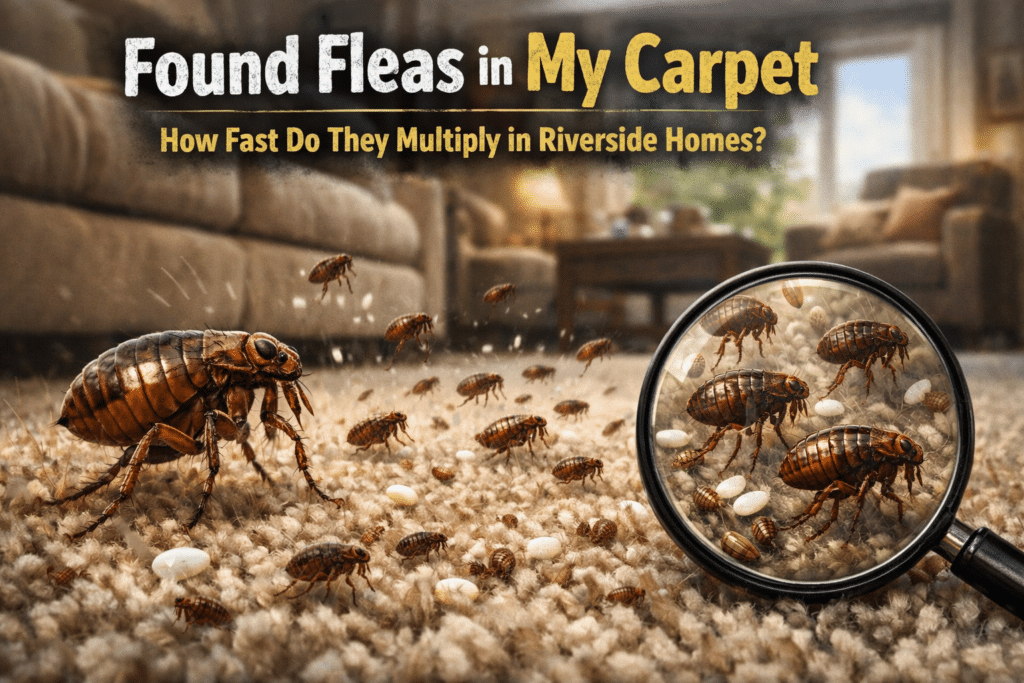
Your carpet provides everything fleas need to survive and multiply. The fibers create dark, protected spaces where flea eggs settle deep between threads. Larvae hide in these spaces and feed on dead skin cells, pet dander, and adult flea droppings.
Flea eggs are tiny white ovals about the size of a grain of salt. They easily slip between carpet fibers where vacuums can’t reach them. Even vigorous vacuuming removes only about 60% of flea eggs and 30% of larvae.
Furthermore, carpet provides the right humidity level for flea development. Larvae need at least 50% humidity to survive. Your carpet traps moisture from the air, pet accidents, and normal household humidity. This moisture keeps larvae alive while they grow.
The pupae stage poses the biggest challenge. Flea pupae wrap themselves in sticky cocoons that attach firmly to carpet fibers. These cocoons protect developing fleas from pesticides and vacuuming. Pupae can wait dormant for up to 12 months until they sense vibration, heat, or carbon dioxide from a host.
How Many Fleas Live in Your Carpet Right Now
Adult fleas make up only 5% of the total flea population in your home. The other 95% hide in your carpet as eggs, larvae, and pupae. When you see one flea on your pet, hundreds more live and grow in your floors.
A typical flea infestation in a Riverside home breaks down like this:
- 50% flea eggs scattered throughout carpets and furniture
- 35% larvae hiding deep in carpet fibers
- 10% pupae wrapped in protective cocoons
- 5% adult fleas actively feeding on pets and people
Consequently, killing the adult fleas you see doesn’t solve the problem. You must eliminate eggs, larvae, and pupae hiding in your carpet. Otherwise, new fleas emerge every day to replace the ones you killed.
Signs of Flea Infestation in Riverside Carpets
Several clear signs tell you that fleas breed in your carpet. Watch for these warning signals:
First, check for flea dirt. These small black or dark brown specks look like ground pepper. Put some on a damp white paper towel. If the specks turn reddish-brown, they’re flea droppings made of digested blood.
Second, watch your pets. Dogs and cats with fleas scratch constantly, especially around their tail, belly, and neck. They might develop red, irritated skin or lose patches of fur from excessive scratching.
Third, look for flea bites on yourself. Flea bites appear as small red bumps, usually in clusters of three. They itch intensely and commonly show up around ankles and lower legs where fleas jump from carpet.
Additionally, try the white sock test. Put on white knee-high socks and walk slowly across your carpet for several minutes. The movement and body heat attract fleas. Check your socks afterward for tiny brown or black jumping insects.
Why DIY Flea Carpet Treatment Usually Fails
Most homeowners try store-bought flea sprays or foggers first. These products kill some adult fleas but miss the eggs, larvae, and pupae. Within two weeks, you see fleas again as new generations hatch.
Flea bombs and foggers create other problems too. The spray doesn’t reach deep into carpet fibers where larvae hide. It also doesn’t penetrate the tough cocoons protecting pupae. Additionally, fleas develop resistance to over-the-counter pesticides over time.
Vacuuming helps but isn’t enough alone. Regular vacuuming removes some eggs and larvae. However, you would need to vacuum thoroughly every single day for months to make a real difference. Most people can’t maintain this schedule.
Also, treating your carpet without treating your pets creates a cycle. Your pets pick up new fleas outside and bring them back inside. These fleas lay eggs in your carpet, and the infestation continues.
Professional Flea Removal for Riverside Carpets
Professional flea control targets all life stages at once. Licensed technicians use products that kill adult fleas, prevent eggs from hatching, and stop larvae from developing. This approach breaks the reproduction cycle completely.
The treatment process starts with a thorough inspection. Technicians identify all areas where fleas breed, not just carpets. They check pet bedding, furniture, baseboards, and any cracks or crevices where fleas hide.
Next, professionals apply insect growth regulators (IGRs) to your carpets. These products mimic flea hormones and prevent larvae from maturing into adults. IGRs remain active for several months, killing new larvae as eggs hatch.
Then, technicians treat carpets with adulticides that eliminate adult fleas on contact. Modern products dry quickly and pose minimal risk to pets and children when used correctly. Most treatments require you to keep pets and kids off carpets for just 2-4 hours.
Southland Pest Control offers comprehensive flea removal services in Riverside that treat your entire home and yard. Our technicians coordinate indoor treatment with outdoor perimeter control to prevent reinfestation.
Timeline for Complete Flea Elimination
Complete flea elimination takes time because you must wait for all pupae to hatch. Most homes need 2-3 treatments spaced 14-21 days apart. This schedule catches new fleas as they emerge from cocoons.
After the first treatment, you should see fewer fleas within 24-48 hours. However, some fleas will still emerge from cocoons over the next few weeks. This doesn’t mean the treatment failed. It means pupae are hatching on schedule.
The second treatment eliminates fleas that hatched since the first visit. A third treatment may be necessary for severe infestations or if you have multiple pets that go outdoors frequently.
What You Must Do During Flea Treatment
Your actions during treatment determine how quickly you eliminate fleas. Follow these steps for best results:
Before treatment, vacuum all carpets thoroughly. This removes adult flea droppings that larvae feed on. It also stimulates pupae to hatch so treatments can kill emerging adults. Throw away the vacuum bag immediately in an outdoor trash can.
Wash all pet bedding in hot water (at least 130 degrees Fahrenheit). Hot water kills fleas at all life stages. Dry bedding on high heat for at least 30 minutes. Do this weekly during treatment.
Treat all pets with veterinarian-approved flea control products. According to the Centers for Disease Control and Prevention, treating pets alongside your home provides the most effective flea control. Coordinate pet treatment timing with your professional carpet treatment.
After treatment, continue vacuuming 2-3 times per week for a month. This removes dead fleas and stimulates remaining pupae to hatch into treated areas. Empty the vacuum outside after each use.
How Riverside’s Climate Affects Flea Growth in Carpets
Riverside’s warm climate extends flea season almost year-round. While flea activity peaks in summer, mild winters rarely get cold enough to kill fleas completely. Indoor heating during winter maintains perfect conditions for flea development in your carpets.
Summer temperatures above 95 degrees actually slow outdoor flea development. However, air-conditioned homes stay between 68-78 degrees, which speeds up the flea life cycle. This means your indoor carpets can have more flea activity in summer than your yard.
Humidity matters too. Riverside’s average humidity ranges from 40% to 60%. Flea larvae need at least 50% humidity to survive. Your carpets trap enough moisture to sustain larvae even during dry months.
Therefore, Riverside homeowners face flea pressure in every season. You cannot wait for cold weather to solve a flea problem naturally. Professional treatment becomes necessary to break the breeding cycle.
Long-Term Prevention After Carpet Treatment
Once professionals eliminate your flea infestation, prevention keeps them from returning. Simple maintenance protects your carpet and your family.
Keep all pets on year-round flea prevention medication. Your veterinarian can recommend the best products for your pets’ needs. Monthly topical treatments or oral medications stop fleas before they lay eggs in your carpet.
Vacuum carpets at least twice weekly. Regular vacuuming removes flea eggs before they hatch. Pay special attention to areas where pets rest and under furniture where eggs accumulate.
Wash pet bedding weekly in hot water. This eliminates any eggs or larvae before they mature. Keep bedding in areas that are easy to clean rather than directly on wall-to-wall carpet.
Seal gaps around doors and windows where fleas might enter. Wildlife like squirrels, raccoons, and stray cats carry fleas. Preventing these animals from nesting near your home reduces flea pressure.
Additionally, consider professional quarterly treatments during peak flea season. Preventive treatments cost less than treating a full infestation. They create a protective barrier that stops fleas before they establish in your carpet.
Stop Fleas from Multiplying in Your Riverside Carpet Today
Fleas multiply too fast to ignore. Every day you wait allows thousands more fleas to hatch in your carpet. The problem grows worse and costs more to fix with each passing week.
Southland Pest Control eliminates fleas at every life stage with safe, effective treatments. Our licensed technicians have removed flea infestations from hundreds of Riverside homes. We use professional-grade products that kill eggs, larvae, pupae, and adults in a single visit.
We also treat your yard to create a complete barrier against reinfestation. Our follow-up visits ensure fleas don’t return. Most importantly, we guarantee our work.
Don’t let fleas take over your home. Schedule your flea inspection today and get same-day treatment when you need immediate relief. Protect your family, your pets, and your peace of mind with professional flea control from Southland Pest Control.