
Short Answer: To get bats out of the attic safely and legally in California, you install a one-way exclusion device that lets bats fly out at night but blocks return — followed by sealing all entry points after the colony has left. Specifically, this is the ONLY method state and federal wildlife agencies recommend; trapping, killing, or sealing bats inside the attic is illegal under California law and federal Migratory Bird Treaty Act-equivalent bat protections. Above all, exclusion CANNOT be performed during the maternity season (roughly May through mid-August in Southern California) because flightless pups would be trapped inside and die. By contrast, the right windows are early spring (before pups arrive) and late summer/early fall (after pups have fledged). Notably, bat colonies typically return year after year — so the exclusion has to be done correctly the first time or it just gets repeated.
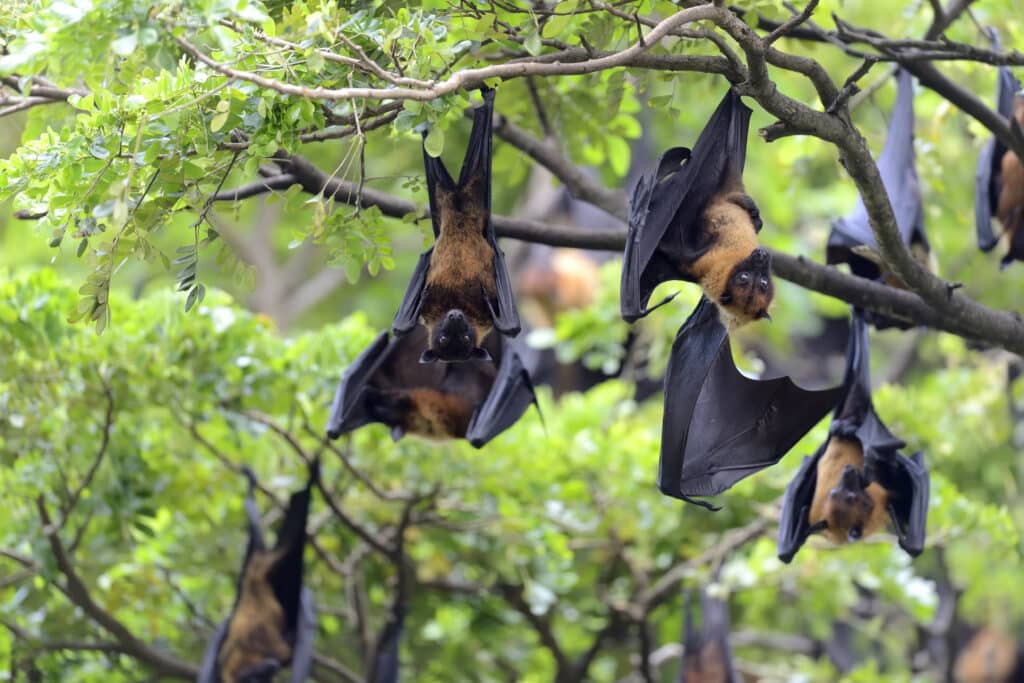
The Legal Reality First: California Protects Bats
Don’t Skip This Section
All bat species in California are protected under state law. Specifically, the California Department of Fish and Wildlife states that bats may not be intentionally killed, harmed, or relocated outside of structured exclusion procedures. Furthermore, some California bat species are federally listed or under federal review, which adds another layer of protection. Above all, attempting to gas, poison, glue-trap, or otherwise kill bats can carry meaningful state fines plus federal penalties depending on species.
In practice, this matters because most online “how to” guides for bat removal were written for jurisdictions without California’s protections. Specifically, methods that are legal in some states (lethal trapping, certain pesticides, even certain exclusion timings) are NOT legal in California. Furthermore, hiring a non-California-licensed wildlife service to handle bats can put you on the receiving end of the same fines if they use a method that violates state law on your property.
Why Bats Pick Attics in the Inland Empire
Specifically, Southern California is home to roughly 25 bat species, several of which colonize attics, eaves, and wall cavities in residential structures. Furthermore, the most common attic bat in the Inland Empire is the Mexican free-tailed bat (Tadarida brasiliensis), which forms maternity colonies in protected, warm cavities — exactly the conditions a Riverside attic provides.
Notably, bats are not random invaders. According to Bat Conservation International’s bats 101 resource, the conditions bat colonies select for include:
- Stable warm temperatures (Riverside summer attics reach 110°F+, which actually suits Mexican free-tailed bats)
- Multiple entry/exit points
- Protection from predators
- Proximity to insect-rich foraging areas (within 5-10 miles)
- Lack of disturbance
By contrast, the average Inland Empire suburban attic with poorly-sealed soffit vents, gaps around fascia boards, or open chimney flues meets all five conditions. As a result, attic bat colonies are common across Riverside, Eastvale, Moreno Valley, and the broader Inland Empire.
The 6 Signs You Actually Have Bats (Not Mice or Birds)
Specifically, bat activity has signatures distinct from other attic intruders. Furthermore, accurate identification matters because the legal protections and removal methods differ.
1. Dusk and dawn activity
Specifically, bats emerge at sunset to feed and return before dawn. By contrast, rodents are most active at night without the dusk timing signature.
2. Squeaking, chittering, scratching at twilight
Furthermore, bats vocalize in high-pitched chatter as they exit and return. Notably, this is sharper and faster than rodent noises.
3. Guano (bat droppings)
Specifically, guano looks like rodent droppings but crumbles to powder when touched. By contrast, rat droppings stay solid. Guano accumulates in piles below roost sites.
4. Stained entry points
Notably, repeated entry through the same gap leaves a brown/black greasy stain from body oils — usually visible on exterior fascia or soffit gaps.
5. Distinct musky/ammonia smell
Generally, established colonies produce a strong urine-ammonia odor that becomes noticeable in living spaces below.
6. Visible bats at dusk
Above all, the surest sign: watch the suspected exit point at sunset. Bats flying out one by one within a few minutes confirms an active colony.
The California Maternity Season Rule
Specifically, the most critical seasonal constraint on bat exclusion is the maternity season. Furthermore, female bats give birth in spring and care for non-flying pups for 4-6 weeks before the pups can fly on their own. By contrast, performing exclusion during this window seals flightless pups inside the attic, where they die — which is both illegal and a serious decomposition/odor problem in your home.
Spring (Mar-Apr)
Exclusion window OPEN. Bats have returned but haven’t yet given birth. Generally, the best window if you can act fast.
May-Mid-August
Maternity season — exclusion PROHIBITED. Pups are present and cannot fly. Above all, no removal during this window in California.
Late Aug-Sep
Exclusion window OPEN. Pups have fledged. Specifically, the second strong window of the year.
Oct-Feb
Specifically, many California bats hibernate or migrate. Furthermore, some attic colonies are inactive in winter — exclusion is possible but verify activity first.
Notably, the exact maternity dates vary by species and elevation — Mexican free-tailed bats in Riverside may have pups May through early August, while higher-elevation species may extend later. Above all, professional bat exclusion in California always includes species identification and timing verification before any work begins.
The Right Method: One-Way Exclusion Devices
By contrast, the one-way exclusion device is the only method endorsed by state wildlife agencies and bat conservation organizations. Specifically, it consists of a tube, sleeve, or netting installed over the primary bat exit hole that lets bats fly OUT at dusk but prevents them from flying back IN.
In practice, the exclusion sequence runs:
- Full inspection. Specifically, identify EVERY entry/exit point — bats can use openings as small as 3/8 inch. Furthermore, missing one means the exclusion fails.
- Confirm maternity timing. Above all, verify the work window is legal (outside May–mid-August in Inland Empire).
- Seal all secondary entry points first. Generally, leave only ONE entry point open — the one the exclusion device will be installed on.
- Install the one-way device on the primary exit. Specifically, a downward-facing tube or netting valve that bats can exit but cannot re-enter.
- Wait 3-7 nights. Furthermore, this allows every bat in the colony to exit. Notably, some bats only exit every few nights, so a single overnight wait is insufficient.
- Verify empty colony with inspection at dusk. By contrast, no bats emerging for 2-3 consecutive nights confirms the colony has left.
- Seal the primary entry point and remove the device. Above all, with the colony confirmed gone, this prevents return.
- Sanitize and remediate. Specifically, guano cleanup, decontamination, and odor remediation should follow exclusion. Furthermore, professional cleanup uses respiratory PPE because of histoplasmosis exposure risk.
What NOT to Do
Notably, several common DIY approaches range from ineffective to illegal:
- Don’t seal bats inside. Specifically, blocking all entry points without an exclusion device traps the colony to die in the attic. Above all, this is illegal in California.
- Don’t use mothballs, ammonia, or sound deterrents. By contrast, these don’t consistently work and can violate humane treatment requirements.
- Don’t try to handle bats directly. Furthermore, bats can carry rabies and other diseases — and any direct handling can put you in a quarantine-and-shots scenario with your local health department.
- Don’t attempt removal during maternity season. Above all, illegal and creates flightless-pup mortality.
- Don’t trust pest control providers without specific California bat exclusion experience. Specifically, bat work is its own specialty — providers without bat-specific training often default to methods illegal in California.
Bat-Borne Health Concerns
Specifically, two health concerns drive most of the urgency around bat removal: rabies and histoplasmosis. Furthermore, both are manageable risks with proper precautions but warrant awareness.
Rabies. Generally, only a small percentage of bats carry rabies, but any direct contact with a bat (including waking with a bat in the room) typically warrants post-exposure rabies vaccination per CDC guidance. Notably, the US Fish and Wildlife Service documents the broader ecology of California’s bat species — and the rabies risk applies across species. Above all, if a bat is found in a bedroom where someone slept, call your county health department.
Histoplasmosis. By contrast, this is a respiratory fungal infection from inhaling spores in dried bat guano. Specifically, the risk is higher in attics with accumulated guano that’s disturbed without respiratory protection. Furthermore, professional remediation uses HEPA-filtered vacuum and full PPE for cleanup — DIY guano removal carries genuine inhalation exposure.
When to Call Southland Pest Control
Specifically, bat exclusion in California is a specialized service that requires species identification, seasonal timing knowledge, structural exclusion expertise, and proper PPE for cleanup. Furthermore, certain situations make professional handling effectively required:
- Any bat colony in an attic, eave, or wall void
- Bat activity outside the spring or late summer exclusion windows
- Maternity-season discoveries (must wait, with monitoring)
- Significant guano accumulation requiring biohazard cleanup
- Any direct bat-human contact incident
- Commercial buildings, HOAs, or multifamily structures with bat colonies
- Repeated bat returns despite previous attempted exclusion
Our residential pest control service covers California-compliant bat exclusion across the Inland Empire, and our commercial pest services handles HOAs, multifamily, and commercial buildings with the inspection, exclusion, cleanup, and documentation appropriate for those structures. Furthermore, for attic wildlife generally (rats often coexist with or follow bat colonies into the same spaces), our rat control service complements bat work.
Schedule a California-compliant bat exclusion
Bats in the attic are protected wildlife in California — the wrong removal method carries legal and structural consequences. Southland Pest Control provides species ID, seasonal timing verification, one-way exclusion installation, post-exclusion sealing, and biohazard cleanup as a full-service protocol.
Schedule a bat exclusion consultation for residential or commercial structures across Riverside, San Bernardino, and LA counties.
FAQ
Can I get bats out of my attic during the summer?
By contrast, generally no — not in California. Specifically, the maternity season (roughly May through mid-August in Southern California) is a legally protected window during which flightless bat pups are present in the colony. Furthermore, exclusion during this window seals pups inside the attic, where they die — which is both illegal under California Fish and Wildlife regulations and creates a serious decomposition and odor problem in the home. Above all, the right move during maternity season is to schedule the exclusion for late August or early September once pups have fledged. Notably, a professional bat removal provider will refuse to perform exclusion during this window for both legal and ethical reasons.
Is it dangerous to live in a house with bats in the attic?
Specifically, the risks are real but generally manageable. Furthermore, two main concerns are rabies (small percentage of bats carry it; any direct contact warrants medical evaluation) and histoplasmosis (respiratory fungal infection from inhaled bat guano spores). By contrast, simply having an attic colony without disturbing it carries lower risk than the cleanup phase, which is when guano gets aerosolized. Generally, while waiting for legal exclusion (during maternity season, for example), avoid entering the attic, keep attic access closed, and ensure no openings let bats into the living space. Above all, any direct bat contact — especially finding one in a bedroom — warrants a call to your county health department for rabies post-exposure assessment.
How long does bat exclusion take?
Generally, the active exclusion phase takes 3-7 nights after the one-way device is installed — the time required for all bats in the colony to exit. Specifically, the full project from inspection to final sealing typically runs 2-3 weeks: initial inspection and entry-point mapping, exclusion device installation, the multi-night exit window, verification that the colony is empty, then final sealing and guano cleanup. Furthermore, attempting to compress this timeline by sealing earlier risks leaving bats inside the attic. By contrast, well-executed exclusion is usually permanent — bats can’t re-enter through properly sealed gaps.
What about bat boxes — can I put one outside instead?
Specifically, bat boxes (artificial roosting structures installed in the yard) can give displaced bat colonies a place to go after exclusion, which is environmentally beneficial. Furthermore, bats provide significant insect control (a single bat eats hundreds of mosquitoes per night). By contrast, a bat box alone won’t motivate a colony to leave the attic if attic conditions remain better — the box is an addition to exclusion, not a replacement for it. Notably, position bat boxes well away from the house (at least 25 feet) so colonies don’t simply migrate to a nearby eave. Above all, the right sequence is: exclude from attic, seal entries, optionally install bat box, monitor.
How much does professional bat exclusion cost in Riverside?
Pricing varies significantly with attic size, number of entry points, colony size, presence of guano accumulation, and structural access challenges. Specifically, the components of a complete bat exclusion include inspection and species ID, one-way device installation, multi-night monitoring, final structural sealing of all entry points, and guano cleanup with appropriate PPE. Generally, expect pricing to reflect the multi-visit nature of the work. By contrast, lowball quotes that promise one-visit removal usually indicate methods that don’t address all entry points — and may not be California-compliant. We provide written estimates after on-site inspection so you see the line items for your specific structure before agreeing to the work.