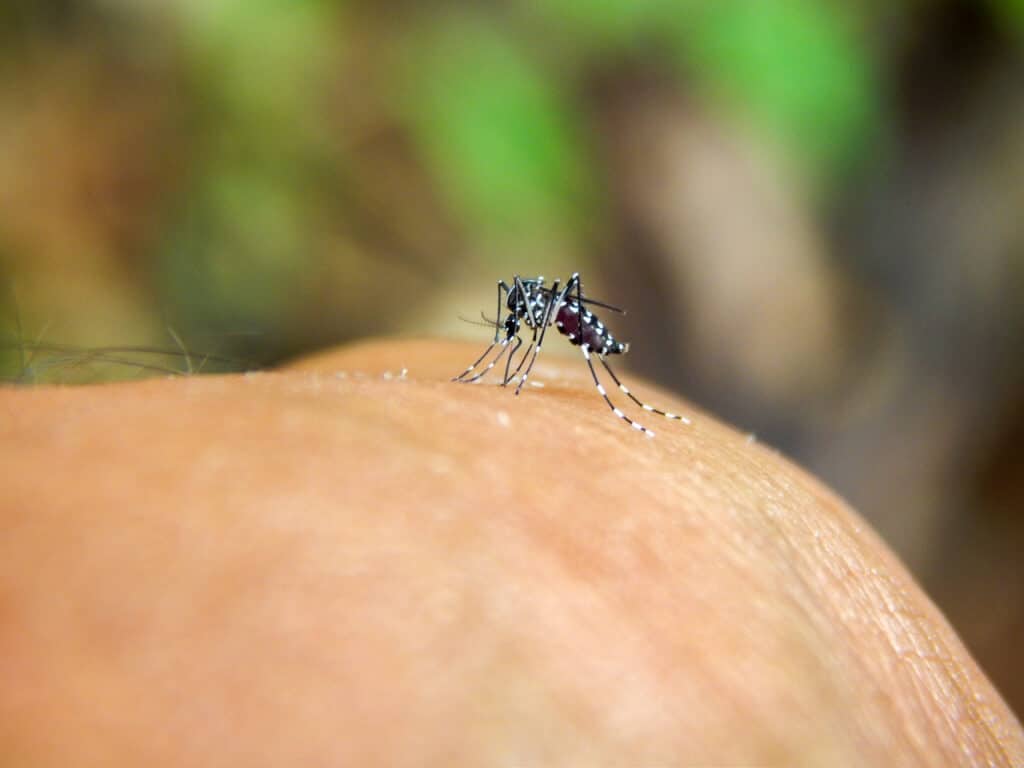
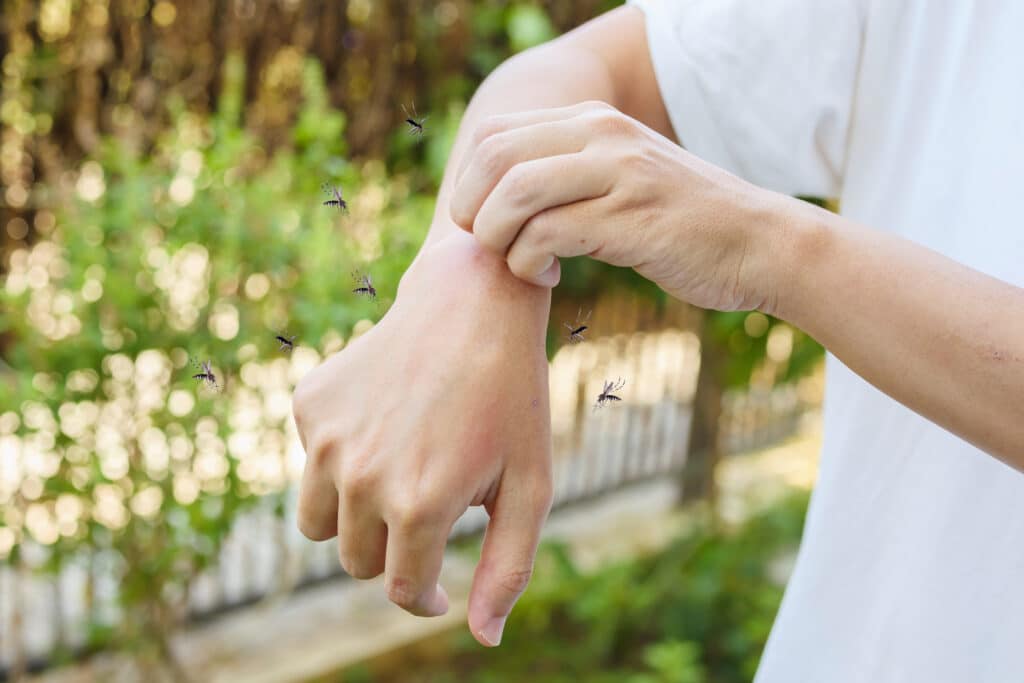
You sprayed the yard. Maybe you hired someone to come out and treat the whole perimeter. For a day or two, things seemed better. Then the mosquitoes came back. Same spots. At the same time of the evening.
This is one of the most common frustrations homeowners in Riverside County bring to pest control companies. And the answer is almost always the same.
The Short Answer
Mosquito spray kills the adult mosquitoes that are present at the time of treatment. It does not eliminate breeding sites, does not affect eggs or larvae already in standing water, and does not prevent new mosquitoes from moving onto your property. Without addressing the source of the problem, spray is a temporary fix that needs to be repeated indefinitely. The solution is a combination of source elimination, targeted larvicide treatment, and ongoing adult mosquito control — not a single spray.
Here is exactly why spray falls short, and what actually works for Riverside homeowners in 2026.
What Mosquito Spray Actually Does
Adult mosquito sprays — whether applied by a homeowner with a store-bought product or by a pest control technician using professional-grade equipment — work by contacting and killing adult mosquitoes that are present at the time of application.
That is it. The spray does not linger long enough to kill mosquitoes that arrive the following day. It does not penetrate standing water to kill larvae. It does not affect eggs that have already been laid. And it does nothing to reduce the conditions on your property that are producing new mosquitoes continuously.
In Riverside County’s warm climate, a single female mosquito can lay up to 300 eggs at a time in as little as a bottle cap of standing water. Those eggs can hatch in 24 to 48 hours under the right conditions. By the time the residual effect of a spray treatment fades — typically within a few days — a new generation is already emerging.
Spraying without source control is the equivalent of mopping the floor while the faucet is still running.
Why It's Worse in Riverside, CA
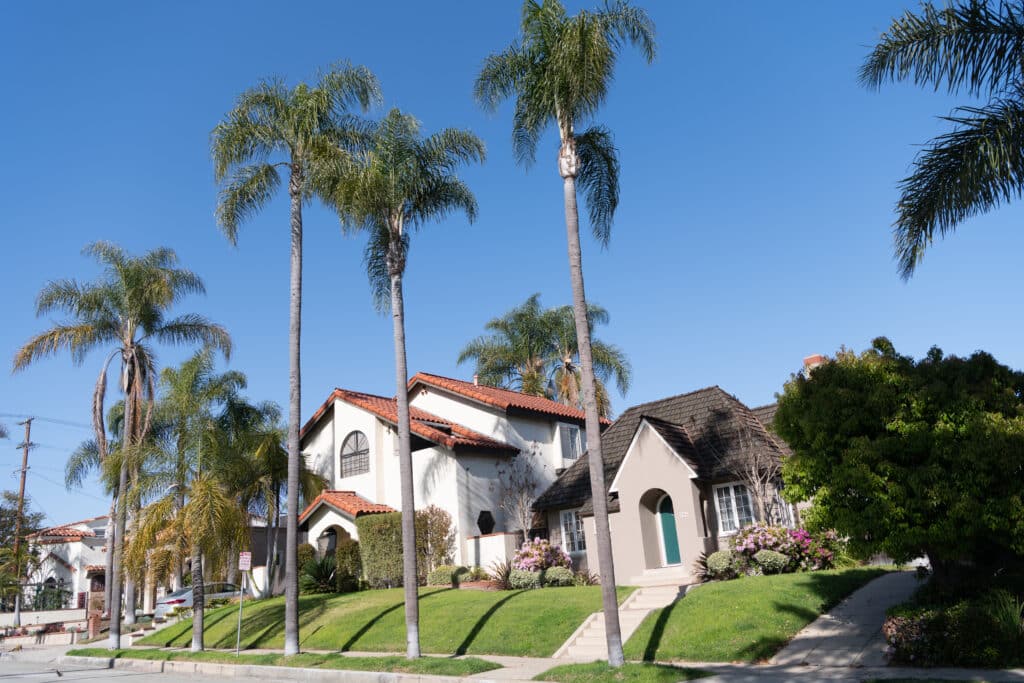
Riverside County’s climate creates mosquito pressure that most other parts of the country do not experience at the same level. Warm temperatures persist well into fall, extending the active mosquito season significantly beyond what homeowners in cooler climates deal with.
Three factors specific to Riverside make mosquito control more challenging here than in many other regions.
Year-round warmth.
Mosquitoes in Riverside County remain active for a longer portion of the year than in colder climates. There is no hard winter freeze that naturally reduces populations the way it does in other parts of the country. This means breeding continues nearly year-round in sheltered areas.
Aedes mosquitoes.
The Aedes mosquito — an invasive species now well established in Southern California — bites aggressively during daylight hours, unlike the native Culex mosquitoes that are primarily active at dawn and dusk. Aedes mosquitoes breed in extremely small amounts of standing water, making source elimination harder. A single clogged gutter, a forgotten plant saucer, or a child’s toy left outside after rain can produce hundreds of them.
Irrigation Habits.
Riverside County homeowners irrigate heavily during dry months. Overwatering creates moisture and standing water conditions in low spots, around plant containers, and in soil depressions that are ideal mosquito breeding environments and easy to miss during a property inspection.
According to the UC Integrated Pest Management Program, more than 50 species of mosquitoes occur in California, and several readily feed on people while transmitting disease-causing viruses including West Nile virus, encephalitis, dengue, and Zika. Effective control requires eliminating breeding sites, not just targeting adult mosquitoes.
The Real Solution (What Actually Works)
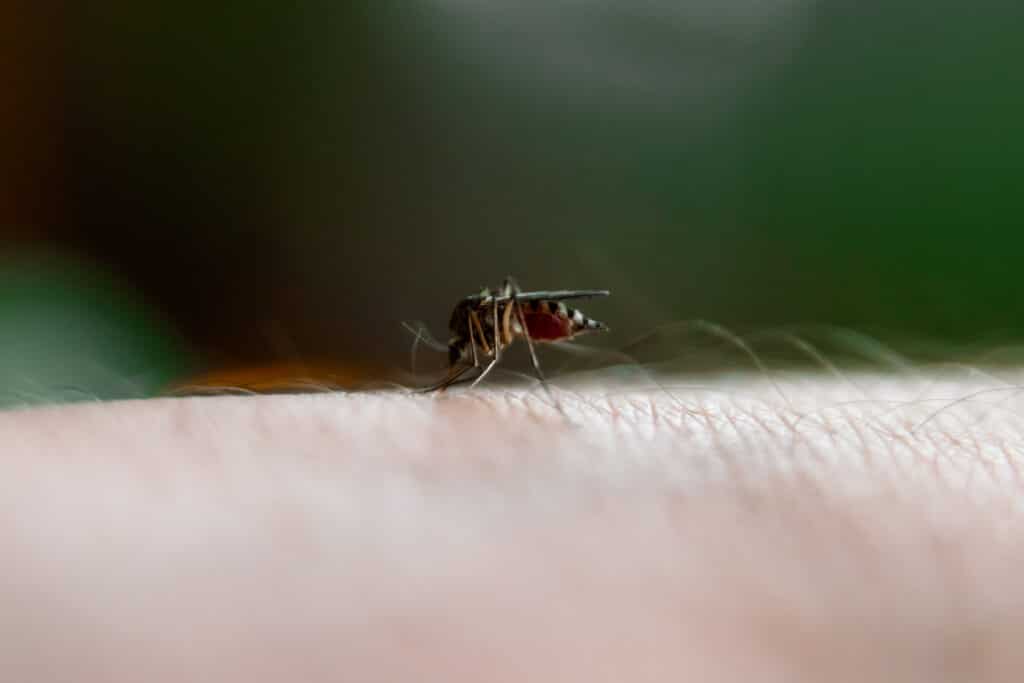
Solving a mosquito problem in Riverside requires addressing all three stages of the mosquito life cycle — not just the adults you can see flying around your yard.
Step 1: Eliminate Standing Water
This is the most impactful thing you can do, and it costs nothing. Walk your entire property and remove or treat every source of standing water you can find.
Common breeding sites Riverside homeowners miss:
- Plant saucers and pot trays holding water after irrigation
- Bird baths that are not changed weekly
- Clogged rain gutters holding debris and moisture
- Low spots in the lawn where irrigation water pools
- Tarps, garbage can lids, and outdoor furniture covers collecting rainwater
- Children’s toys, buckets, and outdoor equipment left outside
- Pet water bowls left outdoors and not refreshed daily
- Irrigation valve boxes with standing water inside
Eliminating these sites removes the breeding environment entirely. No breeding site means no larvae. No larvae means no new adults.
Step 2: Treat What You Cannot Eliminate
Some water features cannot be drained — ponds, fountains, rain barrels, and decorative water elements. These need to be treated with a larvicide rather than left untreated.
Bacillus thuringiensis israelensis (Bti) is a naturally occurring bacterium that kills mosquito larvae without affecting people, pets, fish, or other wildlife. It is available in dunk or granule form and is highly effective when applied to standing water that cannot be removed. This is a critical step that most homeowners skip entirely when relying on spray alone.
Step 3: Apply Professional Adult Mosquito Control
With breeding sites addressed, adult mosquito control becomes far more effective because you are no longer fighting a continuously replenishing population. A professional barrier treatment applied to vegetation, shaded areas, and mosquito resting zones creates a residual effect that significantly reduces adult mosquito activity.
Southland Pest Control’s mosquito control service combines barrier treatment with a full property assessment to identify and address breeding sources. This is what separates a treatment that lasts from one that wears off in two days.
Step 4: Maintain on a Schedule
Mosquito control in Riverside is not a one-time event. It is an ongoing process. New mosquitoes travel onto your property from neighboring yards, storm drains, and green spaces. Larvae continue to develop in any standing water that accumulates between visits.
A scheduled maintenance program — typically monthly during peak season — keeps adult populations suppressed while giving your technician the opportunity to catch new breeding sources before they become a larger problem. This is the difference between managing a mosquito problem and living with one indefinitely.
What to Do Right Now
If mosquito spray has not been working at your Riverside home, the first step is a property assessment to identify where mosquitoes are actually breeding. Without that information, any treatment is addressing symptoms rather than the source.
Southland Pest Control serves homeowners throughout Riverside County with mosquito control programs that go beyond spray. Our licensed technicians assess your full property, treat breeding sources, and set up a maintenance schedule that keeps mosquitoes out of your yard through the entire active season.
If mosquitoes have been a persistent problem despite previous treatments, contact us today for a free quote and a property evaluation.
(951) 653-7964 | Schedule Your Service