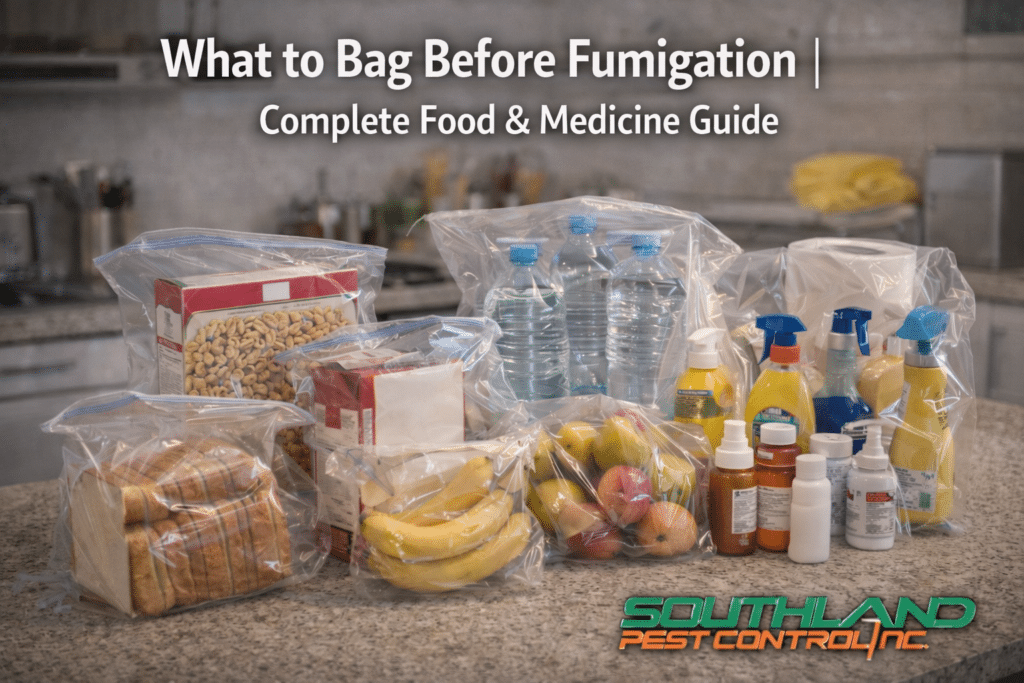
You need to bag all food, medicine, and any items you consume or put in your mouth before fumigation because Vikane gas penetrates unsealed containers and contaminates everything inside. Special Nylofume bags provide the only approved protection against fumigation gas. Items stored in regular plastic bags, cardboard boxes, or paper packaging require bagging to stay safe during treatment.
Fumigation day approaches fast. You wonder what needs protection and what stays safe. The list of items to bag feels overwhelming. This guide explains exactly what to bag, what to remove, and what stays untouched during your Riverside fumigation.
Why You Must Bag Items Before Fumigation
Vikane gas penetrates almost everything during fumigation. The gas molecules are extremely small and pass through cardboard, paper, plastic wrap, and thin plastic containers. Only specific barriers stop the gas from contaminating your belongings.
Food and medicine absorb fumigation gas quickly. Even sealed packages allow gas penetration. Unopened cereal boxes, chip bags, and medicine bottles do not provide adequate protection. Consuming contaminated items causes serious health problems including nausea, breathing difficulties, and poisoning.
Furthermore, the fumigation company and your pest control provider require proper bagging for legal and safety reasons. They cannot proceed with treatment if you skip this critical step. Your safety depends on following these requirements exactly.
Complete List of Food Items You Need to Bag Before Fumigation
All food requires bagging or removal before fumigation starts. This includes items you might not consider food at first glance. Go through your entire home room by room to catch everything.
Bag these kitchen items in Nylofume bags:
- All boxed and bagged foods (cereal, crackers, chips, pasta, rice)
- Bread, tortillas, and baked goods
- Fresh fruits and vegetables
- Eggs in cartons or egg holders
- Spices, seasonings, and cooking oils
- Coffee, tea, and drink mixes
- Candy, chocolate, and snacks
- Pet food and treats
- Baby food, formula, and snacks
- Vitamins and supplements
- Condiments in squeeze bottles
- Opened jars and containers
Additionally, check these often-forgotten food storage areas:
- Pantry shelves and lazy susans
- Kitchen drawers with snacks
- Refrigerator and freezer (if not sealed properly)
- Garage or utility room food storage
- Guest room snack baskets
- Office desk drawers with candy
- Bedside table snacks
Therefore, plan several hours for bagging food items. Large families with multiple storage areas need extra time. Start this process two to three days before fumigation.
Medicine and Health Items That Need Bagging Before Fumigation
All medicine requires protection during fumigation regardless of packaging. Prescription medications, over-the-counter drugs, and health supplements all need bagging. The gas contamination makes medicine unsafe to consume.
Bag these medical and health items:
- Prescription medications in bottles or packets
- Over-the-counter pain relievers and cold medicine
- Vitamins and dietary supplements
- Inhalers and breathing treatments
- Eye drops and contact lens solution
- First aid supplies and ointments
- Toothpaste and mouthwash
- Chapstick and lip balms
- Throat lozenges and cough drops
- Antacids and digestive aids
Moreover, gather medicine from multiple bathrooms, bedrooms, and travel bags. People often store backup supplies in different locations. Check medicine cabinets, nightstands, purses, and gym bags thoroughly.
Household Items You Need to Bag or Remove
Several non-food household items also require bagging before fumigation. These items contact your mouth or skin and absorb gas easily.
Bag or remove these household items:
- Toothbrushes and dental floss
- Baby bottles, nipples, and pacifiers
- Pet food bowls and water dishes
- Makeup and cosmetics
- Facial tissues and toilet paper (if opened)
- Cotton balls and cotton swabs
- Deodorant and body products
- Bath sponges and loofahs
- Razors and shaving supplies
Additionally, consider removing valuable or sentimental items. While fumigation does not damage most objects, many homeowners feel more comfortable storing jewelry, photos, and important documents elsewhere during treatment.
What You Do NOT Need to Bag Before Fumigation
Many items stay safe without bagging during fumigation. Understanding what stays unprotected saves you hours of unnecessary work.
Leave these items unbagged:
- Canned goods with sealed metal lids
- Glass jars with metal lids (sealed, unopened)
- Bottled water and soda in sealed containers
- Unopened wine and liquor bottles
- Dishes, pots, and pans
- Clothing in closets and drawers
- Towels and linens
- Books and papers
- Electronics and appliances
- Furniture and home decor
However, check with your fumigation company about borderline items. Some companies have specific requirements based on their experience. Always follow your provider’s instructions over general guidelines.
How to Properly Bag Items for Fumigation Protection
Proper bagging technique ensures complete protection during fumigation. Using correct bags and sealing methods prevents gas contamination.
Nylofume bags provide the only approved protection against Vikane gas. These special multi-layer bags block gas penetration completely. Regular plastic bags, garbage bags, and zip-lock bags do not work. The gas passes right through standard plastic.
Most fumigation companies provide Nylofume bags or tell you where to buy them. Hardware stores and pest control suppliers stock these bags. Purchase bags several days before fumigation so you have time to pack everything properly.
Follow these bagging steps for best results:
- Sort items by type and size before bagging
- Place similar items together in each bag
- Do not overfill bags or they will not seal properly
- Squeeze air out before sealing
- Twist bag tops tightly several times
- Use twist ties or rubber bands to secure closures
- Label bags so you remember contents
- Store bagged items in accessible locations
Furthermore, seal bags as close to fumigation time as possible. This prevents accidental opening and reduces time food stays in plastic bags.
Special Considerations for Refrigerators and Freezers
Refrigerators and freezers create confusion for many homeowners preparing for fumigation. The answer depends on your specific appliance and fumigation company requirements.
Most modern refrigerators seal well enough to protect food during fumigation. The tight gaskets prevent significant gas entry. However, you must check with your fumigation provider first. Some companies require bagging refrigerated items anyway.
If your fumigation company approves leaving food in the refrigerator, take these precautions:
- Remove any food stored on top of or beside the refrigerator
- Check that door seals close tightly with no gaps
- Do not open the refrigerator between the fumigation start and clearance
- Discard ice from ice makers after fumigation
Older refrigerators with worn seals require complete food removal. The gas seeps through damaged gaskets and contaminates everything inside. When in doubt, bag everything or remove it entirely.
Southland Pest Control provides detailed fumigation preparation instructions for Riverside homeowners, including specific guidance on refrigerators and food storage. Our team answers questions and helps you prepare correctly.
Baby and Pet Items That Need Special Attention
Babies and pets face higher risks from fumigation gas exposure. Their smaller size and different metabolisms make contamination more dangerous. Extra care protects these vulnerable family members.
Bag or remove all baby items, including:
- Formula (opened and unopened)
- Baby food jars and pouches
- Bottles, nipples, and sippy cups
- Pacifiers and teething toys
- Baby snacks and puffs
- Diaper cream and baby toiletries
Similarly, protect pet supplies thoroughly:
- All pet food (dry, wet, treats)
- Food and water bowls
- Chew toys that pets put in their mouths
- Pet medications and supplements
- Treats stored throughout the house
Additionally, remove pets from the property during fumigation. According to the Environmental Protection Agency, all people and pets must leave during fumigation and cannot return until the property receives clearance. Plan pet boarding well in advance of your fumigation date.
Common Mistakes When Bagging Items for Fumigation
Many homeowners make preventable mistakes during fumigation preparation. Avoiding these errors saves time, money, and protects your health.
First, people use the wrong bag types. Regular plastic bags do not stop Vikane gas. You must use Nylofume bags specifically designed for fumigation. Using incorrect bags means everything inside gets contaminated.
Second, homeowners forget hidden food storage. Check guest rooms, offices, garages, and cars parked inside garages. Forgotten items contaminate and require disposal after fumigation.
Third, people bag items too early. Food sitting in plastic bags for days before fumigation can spoil. Condensation builds up inside bags. Pack bags one to two days before fumigation, not a week ahead.
Fourth, improper sealing allows gas entry. Loose twist ties or inadequate twisting lets gas seep inside. Seal each bag thoroughly and check closures twice.
Finally, homeowners sometimes ignore medicine. All medicine needs bagging, even items in childproof bottles. The gas penetrates bottle caps and contaminates pills inside.
How Long Items Stay Bagged During Fumigation
Items remain bagged from fumigation start through the clearance process. The total time typically ranges from 24 to 72 hours, depending on home size and infestation severity.
Most Riverside fumigations follow this timeline:
- Day 1: Fumigation company tents your home and releases gas
- Day 2: Gas remains in your home killing termites
- Day 3: Company aerates your home and tests air quality
- Return: You receive clearance to re-enter, usually afternoon of Day 3
Therefore, pack enough bagged food for three full days away from home. Consider your family’s meals, snacks, and special dietary needs. Babies, elderly family members, and people with medical conditions need extra planning.
After clearance, unpack bags immediately. Check all items for unusual odors before consuming. Discard anything that smells wrong or seems contaminated. Better safe than sorry with your family’s health.
Get Expert Fumigation Guidance from Southland Pest Control
Preparing for fumigation requires careful attention to detail. Missing even one food item or medicine bottle creates health risks. The process feels overwhelming, especially for first-time fumigation customers.
Southland Pest Control walks you through every preparation step for your Riverside fumigation. Our experienced team provides detailed checklists, answers your questions, and helps you prepare correctly. We explain exactly what to bag, what to remove, and what stays safe.
We work with licensed fumigation companies and coordinate the entire process. Our team schedules your treatment, oversees preparation, and ensures proper clearance before you return home. We handle the details so you can focus on temporary housing arrangements.
Moreover, we offer free pre-fumigation consultations. We visit your home, assess your specific situation, and create a customized preparation plan. This service helps you avoid mistakes and protects your family’s health.
Do not let fumigation preparation stress you out. Contact Southland Pest Control today to schedule your termite inspection and fumigation. Our team will guide you through every step from initial assessment through safe re-entry. We make fumigation preparation simple, clear, and stress-free for Riverside homeowners.