Complete Guide: How to Remove a Bee Hive Inside Your Walls in Riverside
Removing a bee hive inside your walls requires professional help because attempting DIY removal creates serious safety risks and often makes the problem worse. You must open the wall to access the entire colony, extract all honeycomb and bees, then seal entry points to prevent their return. Most Riverside homeowners pay between $500 and $2,500 for complete removal and repair.
You hear constant buzzing behind your walls. Bees fly in and out of a crack near your roofline. Brown or yellow stains appear on your ceiling. These signs mean a colony lives inside your home and grows larger every day.
Why Bee Hives Inside Walls Are So Dangerous
Wall hives create multiple threats to your home and family. The honey production alone causes thousands of dollars in structural damage. A mature colony produces 60 to 100 pounds of honey that seeps through drywall, stains ceilings, and attracts ants, roaches, and mice.
The bees themselves pose health risks too. Defensive bees sting anyone who gets too close to their hive. Furthermore, Africanized honey bees live throughout Riverside and attack in large numbers when disturbed. Multiple stings send people to the emergency room every year.
Additionally, dead bees and rotting honey create terrible odors. The smell permeates your home and lingers for months. Decomposing organic matter also damages insulation and wooden structures inside your walls.
How Bees Build Hives in Riverside Home Walls
Riverside’s Mediterranean climate makes wall cavities perfect for bee colonies. Scout bees search for protected spaces with small entrances and plenty of room inside. Your walls check all these boxes.
Bees enter through surprisingly small openings. Common entry points include:
- Cracks in stucco or wood siding
- Gaps around window frames and door jambs
- Openings where utility lines enter walls
- Damaged soffit vents or fascia boards
- Holes created by woodpeckers or previous pest activity
- Separations between walls and rooflines
Once scout bees find a suitable spot, they return to their swarm with the location. Thousands of bees move into your wall within hours. They immediately start building honeycomb between wall studs.
The colony grows rapidly in Riverside’s warm weather. Temperatures rarely drop below 50 degrees, so bees stay active nearly year-round. A spring swarm becomes a massive colony by summer.
Clear Signs a Bee Hive Lives Inside Your Walls
Several obvious signs tell you that bees nest inside your walls. Watch for these warning signals:
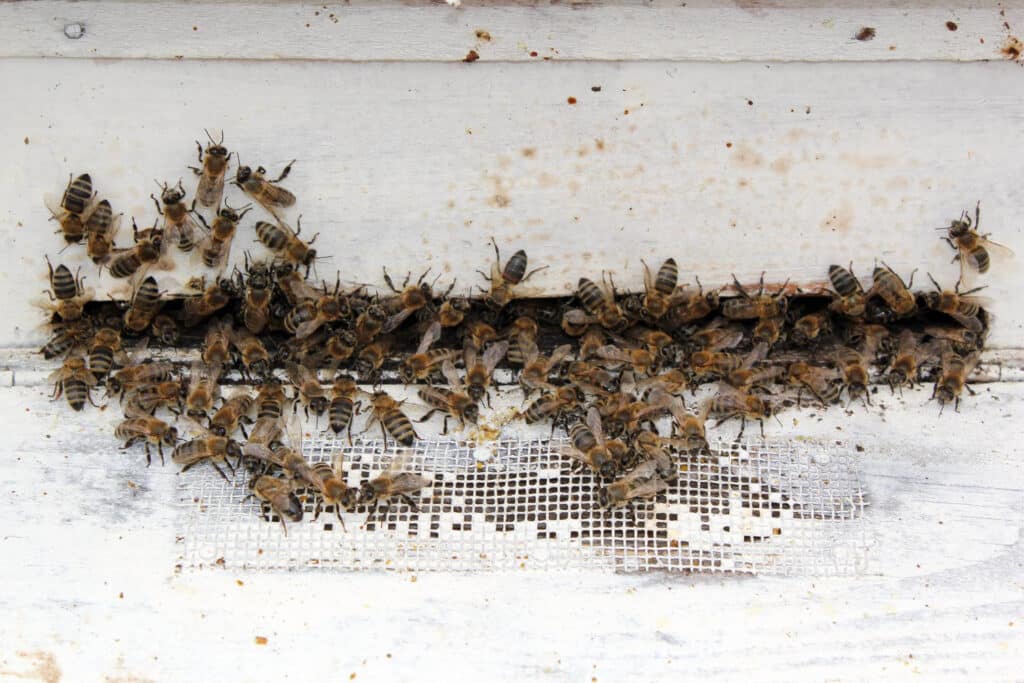
First, observe bee traffic patterns. You will see dozens or hundreds of bees entering and leaving the same spot. This activity continues from sunrise to sunset on warm days.
Second, listen for buzzing sounds inside walls. The noise gets louder near the hive location. You might hear it most clearly at night when other sounds quiet down.
Third, check for honey or wax stains. Brown, yellow, or amber spots appear on walls or ceilings near the hive. These stains grow larger over time as more honey accumulates.
Fourth, notice any sweet smell near certain walls. Fresh honey has a distinctive sweet odor. Older, fermenting honey smells sour or alcoholic.
Additionally, you might find bees inside your home. Confused bees sometimes chew through drywall and emerge into living spaces. This happens more often if someone blocks the outside entrance.
Why You Cannot Remove Wall Hives Yourself
DIY bee hive removal from walls fails for several critical reasons. Understanding these challenges explains why professionals handle this work.
First, you cannot reach the entire hive without opening the wall. Spraying pesticide through the entrance hole only kills bees near the opening. The queen and most workers survive deep inside the wall cavity. The colony rebuilds within weeks.
Second, dead bees and abandoned honeycomb create worse problems than live bees. Honey melts in summer heat and runs through walls. This attracts German cockroaches, Argentine ants, and roof rats. The rotting smell becomes unbearable.
Third, sealing the entrance without removing the hive traps thousands of bees inside your walls. Desperate bees chew through drywall to escape. They emerge throughout your home, creating a dangerous situation. Trapped bees also die and decompose, causing terrible odors.
Fourth, working near bee hives without proper equipment guarantees multiple stings. Professional bee suits, smokers, and specialized tools protect technicians. Without this gear, you risk serious injury or allergic reactions.
Finally, structural repairs require carpentry skills most homeowners lack. You must match existing drywall, textures, and paint colors. Poor repairs leave visible damage that hurts your home’s value.
Professional Process for Removing Bee Hives from Walls
Professional bee hive removal follows a proven process that eliminates bees while protecting your property. Licensed technicians complete the work safely and effectively.
The process begins with a detailed inspection. Technicians locate the exact hive position using thermal imaging cameras or by listening carefully. They identify all entry points and estimate the colony’s size. This information determines the removal strategy and cost.
Next, professionals access the hive by cutting into your wall. They create the smallest opening necessary to reach all comb and bees. Most removals require an opening 2 to 4 feet square. Technicians protect your home with drop cloths and take care to minimize dust and debris.
Then comes the actual bee removal. Many Riverside companies offer live bee removal and relocation services that save colonies while solving your problem. Technicians vacuum bees into special containers and transport them to apiaries where they continue pollinating crops.
After removing the bees, technicians extract every piece of honeycomb. They scrape wax and honey from wall studs, insulation, and any other surfaces. Complete removal prevents future pest problems and eliminates odors.
Subsequently, professionals clean and treat the cavity. They apply products that remove pheromone scents that attract new swarms. Some companies use special enzymes that break down any remaining organic material.
Finally, technicians seal all entry points and repair the wall. They install new insulation if necessary, then replace drywall. Quality companies match your existing wall texture and prime the repair area. You can paint the patch to match your walls.
Timeline for Wall Hive Removal in Riverside
Most wall hive removals take 4 to 8 hours to complete. The exact time depends on hive size, location, and wall construction. Here is what to expect:
- Initial inspection and assessment: 30 to 60 minutes
- Wall opening and hive access: 30 to 60 minutes
- Bee removal and vacuuming: 1 to 2 hours
- Honeycomb extraction and cleaning: 1 to 3 hours
- Cavity treatment and sealing: 30 to 60 minutes
- Wall repair and restoration: 1 to 2 hours
Therefore, plan to be home for most of the day. Technicians need access to both inside and outside your home. Keep children and pets away from the work area during removal.
Cost to Remove Bee Hives from Walls in Riverside
Wall hive removal costs more than removing exposed hives because technicians must open and repair walls. Several factors affect the final price.
Hive size makes the biggest difference. Small colonies cost less to remove than large ones. A basketball-sized hive requires less work than a hive filling an entire wall cavity from floor to ceiling.
Location impacts cost too. First-floor hives cost less than second-story or attic hives. Difficult access increases labor time. Companies charge more for work that requires ladders, scaffolding, or roof access.
Wall construction affects pricing. Wood-framed walls with drywall cost less to repair than plaster walls or brick veneer. Some wall materials require specialized tools or skills.
The extent of damage determines repair costs. Simple repairs need only drywall patching and paint. Extensive damage requires replacing insulation, repairing studs, and matching complex wall textures.
Consequently, most Riverside homeowners pay $500 to $2,500 for complete wall hive removal. Get written estimates from at least three licensed companies. Make sure quotes include bee removal, honeycomb extraction, cavity treatment, entry point sealing, and wall repair.
How to Prevent Bees from Returning to Your Walls
Bees strongly prefer locations that previously held hives. Scout bees can detect pheromone scents from old colonies. In fact, they specifically search for these markers when seeking new nest sites.
Prevention starts with complete hive removal. Professional cleanup eliminates all traces of comb, honey, and pheromones. Half measures fail because any remaining scent attracts new swarms.
Next, seal every possible entry point. According to the Environmental Protection Agency, proper home maintenance and sealing gaps prevents many pest problems including bees. Walk around your home twice per year and check for new cracks or openings.
Use appropriate materials for sealing. Caulk works for small cracks. Steel wool or copper mesh fills larger gaps. Hardware cloth covers vents and other openings that must stay open for ventilation.
Additionally, trim trees and bushes away from your walls. Overhanging branches give bees easy access to high entry points. Keep vegetation at least three feet from your home’s exterior.
Consider annual inspections too. Professional pest control technicians spot problems before bees move in. They identify vulnerable areas and recommend preventive measures. Early detection costs far less than removing an established hive.
What Makes Riverside Homes Attractive to Bees
Riverside’s environment creates ideal conditions for bee colonies. The mild Mediterranean climate means bees stay active almost year-round. Wall cavities maintain comfortable temperatures even during occasional cold snaps.
Local flowering plants provide abundant food sources. Citrus trees, rose bushes, and landscape flowers bloom in every season. Bees easily find pollen and nectar throughout the year.
Urban and suburban water sources help too. Swimming pools, fountains, pet bowls, and irrigation systems give bees easy access to water. Colonies need water to cool hives and feed larvae.
Additionally, older Riverside homes have more entry points. Stucco develops cracks over time. Wood trim separates from walls. Weather stripping deteriorates. These openings welcome bee swarms looking for nesting sites.
When to Call for Emergency Wall Hive Removal
Some situations demand immediate professional response. Call emergency removal services if you notice:
- Bees swarming inside your home in large numbers
- Heavy honey dripping through walls or ceilings
- Anyone in your household with bee sting allergies
- Very aggressive bees attacking people nearby
- Hives blocking access to utilities or equipment
- Structural damage visible from outside
Emergency services respond quickly to protect your family. They safely contain the immediate threat and schedule follow-up work to remove the entire colony. Most companies offer same-day service for true emergencies.
Get Expert Help Removing Bee Hives from Your Riverside Walls
Wall hive removal requires professional expertise you cannot get from DIY videos or online guides. The risks to your safety and your home are too great. Moreover, improper removal creates problems that cost thousands more to fix than hiring professionals initially.
Southland Pest Control specializes in removing bee hives from Riverside home walls. Our licensed technicians have safely removed hundreds of wall colonies. We use proven methods that eliminate bees, extract all honeycomb, and prevent their return.
We handle every aspect of the job from inspection to final wall repair. Our team works efficiently to minimize disruption to your home and family. We also guarantee our work and return if bees come back.
Do not wait for the problem to worsen. Hives grow larger every week. Damage increases. Repair costs multiply. Contact Southland Pest Control today for a free inspection and detailed quote. We offer same-day emergency service when you need immediate help. Protect your home and family with professional bee hive removal you can trust.