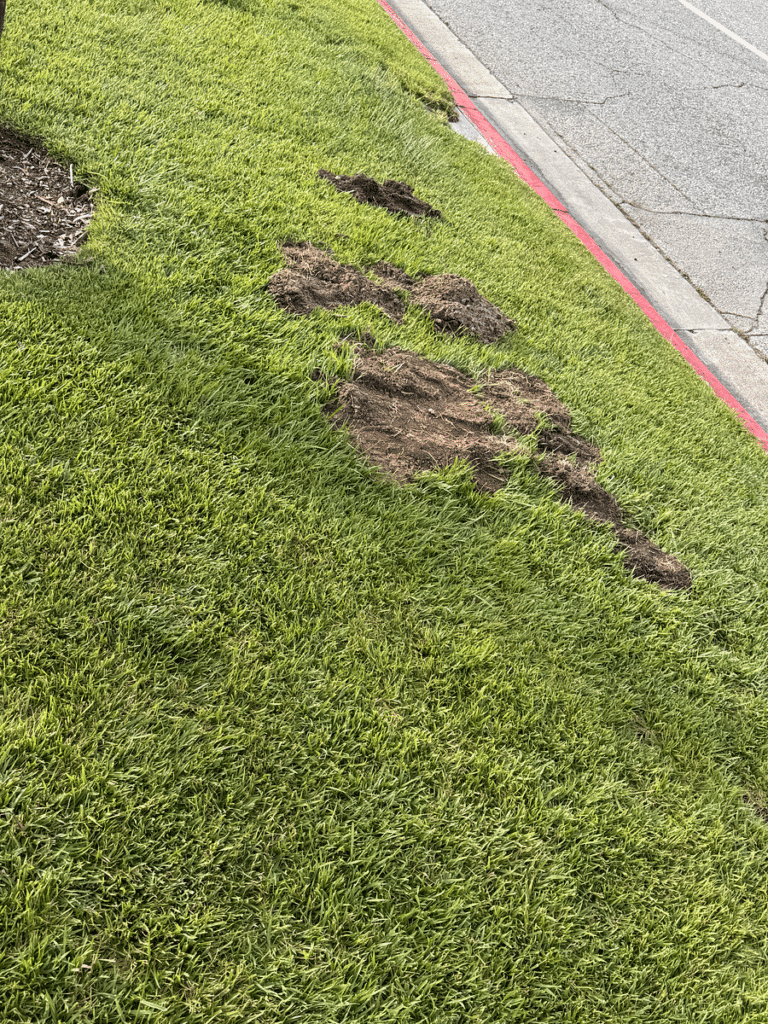
Gopher mounds vs. mole holes look similar at first glance, but they have clear differences. Gopher mounds form a crescent or horseshoe shape with a plugged hole off to one side. Mole mounds look like small volcanoes with a plug in the center. Knowing which pest made the mound helps you choose the right control method.
If you’ve noticed dirt piles popping up across your Riverside lawn, you need to identify the culprit fast. This guide shows you exactly how to spot the difference. You’ll also learn why it matters for protecting your yard.
The Quick Way to Tell Gopher Mounds from Mole Holes
The shape of the mound tells you everything you need to know. Here’s a simple breakdown:
Gopher Mounds:
- Crescent or fan-shaped when viewed from above
- Hole is plugged and off to one side
- Soil looks finely ground and loose
- Multiple mounds appear close together
Mole Mounds:
- Circular and volcano-shaped
- Plug sits in the center (or may be hard to see)
- Soil appears clumpier
- Raised ridges often connect the mounds
Once you learn these differences, you’ll spot them right away. Let’s dig deeper into each pest.
What Do Gopher Mounds Look Like?
Gophers create very distinct mounds as they dig their tunnel systems. According to the University of California Integrated Pest Management Program, gopher mounds are typically crescent or horseshoe-shaped when viewed from above.
The hole sits off to one side of the mound. Gophers almost always plug this hole with dirt. You won’t see an open entrance like you might with ground squirrels.
How Many Mounds Can a Single Gopher Make?
A single gopher can create several mounds in just one day. In Riverside’s irrigated landscapes, gophers can dig year-round because the soil stays moist. This means mounds can appear in any season.
Gophers live almost entirely underground. Their tunnel systems can cover 200 to 2,000 square feet. They dig feeding tunnels about 6 to 12 inches below the surface. Their main living areas can reach 6 feet deep.
Signs You Have Gophers
Look for these clues around your yard:
- Fresh, dark soil in crescent-shaped piles
- Damaged plants with exposed or chewed roots
- Wilting vegetation that seems to sink into the ground
- Chewed irrigation lines or sprinkler damage
Gophers eat plant roots from below. You might not see any damage above ground until your plants start dying. They especially love vegetable gardens, flower beds, and fruit trees. Check our guide for why gophers are in your yard and how to get rid of them.
What Do Mole Holes Look Like?
Mole mounds look different from gopher mounds in several ways. They form round, volcano-shaped piles with the plug in the middle. The soil in mole mounds often appears chunkier than gopher soil.
However, the biggest difference is the raised ridges. Moles create shallow feeding tunnels just below the surface. These tunnels push up the grass and leave visible raised paths across your lawn.
Why Moles Dig Differently
Moles aren’t rodents like gophers. They’re insectivores that hunt for earthworms, grubs, and insects. Their front paws work like paddles, perfect for pushing through soil.
Because moles chase insects near the surface, they create those signature raised ridges. Gophers rarely leave these surface ridges because they dig deeper tunnels to reach plant roots.
Signs You Have Moles
Watch for these indicators:
- Round, volcano-shaped dirt mounds
- Raised ridges running across your lawn
- Spongy areas where tunnels have weakened the soil
- No obvious damage to plants (moles don’t eat vegetation)
Moles rarely damage plants directly. However, their tunnels can disturb root systems and dry them out. The tunnels themselves can also create tripping hazards and ruin the look of your lawn.
Gopher Mounds vs. Mole Holes: Why Identification Matters
Correct identification changes your entire approach to control. Each pest requires different treatment methods.
Gopher Control Methods
Gophers respond best to trapping and targeted treatments. Professional pest control technicians locate the main tunnel system and set traps inside. They may also use bait placed directly in the underground tunnels.
At Southland Pest Control, our licensed technicians use proven methods for gopher control and removal in Riverside. We never use harmful surface chemicals. Instead, we target the tunnel system directly for safe, lasting results.
Mole Control Methods
Moles require different tactics. Since they chase insects, reducing grub populations can make your yard less attractive. However, trapping remains the most effective control method.
Mole traps work differently than gopher traps. Technicians place them in active surface tunnels rather than deep burrows.
Common Mistakes Homeowners Make
Many homeowners waste time and money treating the wrong pest. Here are mistakes to avoid:
Using the wrong trap type. Gopher traps and mole traps work in completely different tunnel systems. A mole trap won’t catch a gopher, and vice versa.
Relying on repellents. Research shows that castor oil, sonic spikes, and vibrating stakes don’t effectively repel either pest. Save your money for methods that actually work.
Treating only one mound. Both gophers and moles have extensive tunnel networks. Treating a single mound won’t solve the problem. You need to target the entire system.
Waiting too long. One gopher can destroy a garden in days. The longer you wait, the more damage occurs and the larger the tunnel system grows.
Other Burrowing Pests in Riverside
Gophers and moles aren’t the only diggers in California. You might also see evidence of:
Ground Squirrels: These leave open, unplugged holes without dirt mounds. They’re larger than gophers and you’ll often see them above ground.
Voles: These small rodents create surface runways through grass. They don’t build mounds but do leave visible trails connecting burrow openings.
If you’re unsure what’s digging up your yard, a professional inspection can identify the pest quickly.
What Attracts Gophers and Moles to Your Yard?
Understanding why these pests show up helps with prevention.
Why Gophers Choose Your Yard
Gophers look for:
- Moist, easy-to-dig soil (common in irrigated landscapes)
- Gardens with tasty root vegetables
- Lush lawns with plenty of roots to eat
- Fruit trees and ornamental plants
Riverside’s climate and irrigation make many yards perfect gopher habitat. Our warm weather means gophers stay active year-round.
Why Moles Choose Your Yard
Moles prefer:
- Lawns with high earthworm populations
- Moist soil that’s easy to dig
- Areas with lots of grubs and insects
- Shaded areas that retain moisture
Healthy lawns often attract moles because earthworms thrive in rich, watered soil. Ironically, the better your lawn, the more appealing it is to moles.
How to Check for Fresh Activity
Both gophers and moles might abandon old tunnels. You only want to treat active areas.
Check mound freshness. Fresh mounds contain dark, moist soil. Old mounds look dry and faded. Gophers may reuse old tunnels, so fresh dirt means recent activity.
Collapse a mound and wait. Flatten a mound with your foot. If a gopher or mole is active, they’ll repair the damage within 24 to 48 hours. No repair means the tunnel might be abandoned.
Look for patterns. New mounds appearing every day or two indicate active pests. No new mounds for a week might mean the pest has moved on.
When to Call a Professional
Some situations call for expert help:
- Multiple mounds appearing daily
- Damage to irrigation systems or sprinkler lines
- Large areas affected across your property
- Previous DIY attempts haven’t worked
- You want safe removal around pets and children
Professional technicians know exactly where to place traps for maximum effectiveness. They can clear an infestation faster than most DIY methods.
Protect Your Riverside Yard Today
Now you know how to tell gopher mounds from mole holes. The shape, location of the plug, and presence of surface ridges all give you clear answers. Quick identification leads to faster, more effective control.
Don’t let burrowing pests destroy your lawn and garden. At Southland Pest Control, we’ve helped Riverside homeowners eliminate gophers and moles for almost 20 years. Our eco-friendly methods protect your family, pets, and landscape.
Ready to reclaim your yard? Contact Southland Pest Control today for a free inspection. We’ll identify your pest problem and create a customized removal plan.
Call us at (951) 653-7964 or fill out our online form to get started.